Living Heritage
Saharan Culture & Traditions
Discover the rich heritage, customs, and way of life of the Saharan people
The Sahara Desert is home to one of the world's most ancient and fascinating cultures. For thousands of years, the Berber people have lived in harmony with the desert, developing unique traditions, music, crafts, and ways of life that have been passed down through generations. Our cultural experiences offer travelers an authentic glimpse into this rich heritage, from traditional music around campfires to learning about nomadic lifestyles and sustainable desert living.
Berber Traditions
The Berber people, also known as Amazigh, are the indigenous inhabitants of North Africa, with a history spanning over 4,000 years. Their traditions are deeply rooted in the desert landscape, reflecting a profound connection to nature and community. Key aspects of Berber culture include: • Nomadic Heritage: Many Berber families have maintained nomadic or semi-nomadic lifestyles, moving with their herds across the desert in search of water and pasture. This way of life has shaped their values of adaptability, resourcefulness, and community cooperation. • Traditional Crafts: Berber artisans are renowned for their skills in weaving, pottery, leatherwork, and metalwork. Each region has its own distinctive patterns and techniques, often passed down through families for generations. • Language & Identity: The Berber language (Tamazight) has multiple dialects and is an essential part of cultural identity. Many Berber people are multilingual, speaking Arabic, French, and sometimes Spanish in addition to their native tongue. • Hospitality: The concept of hospitality is central to Berber culture. Visitors are welcomed with traditional mint tea, dates, and warm hospitality, regardless of their background or origin. • Sustainable Living: Berber communities have developed sustainable practices for desert living, including water conservation, traditional architecture that stays cool in extreme heat, and knowledge of desert plants and their uses. • Religious & Spiritual Practices: While most Berbers are Muslim, many also maintain pre-Islamic spiritual beliefs and practices related to nature, ancestors, and the desert environment.
Campfire Storytelling
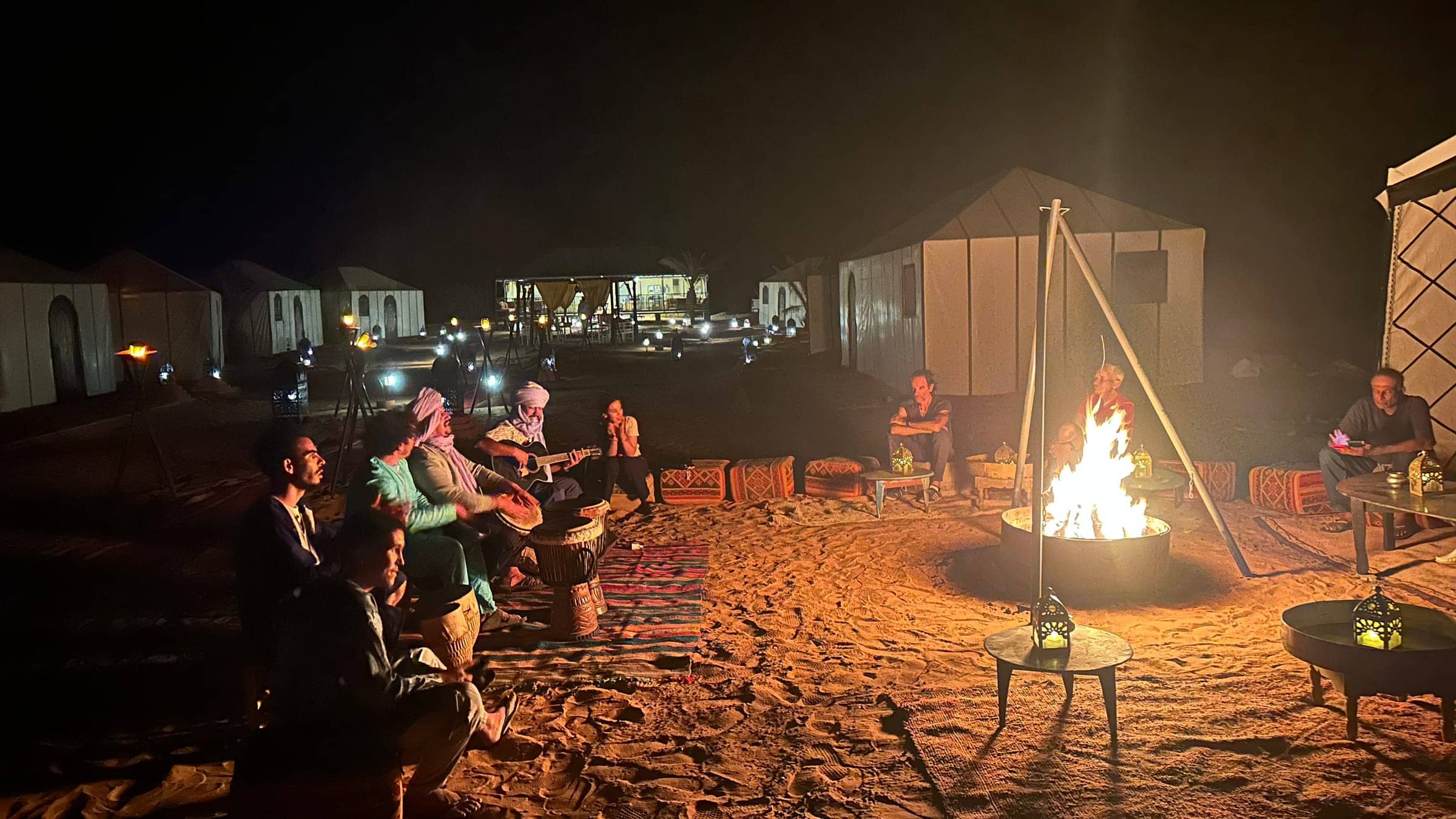
Under the vast, starlit Saharan sky, around the warm glow of a campfire, one of the most cherished Berber traditions comes alive: storytelling. For generations, stories have been the primary way knowledge, history, and cultural values are passed from elders to the young. The Art of Desert Storytelling: Storytelling in the Sahara is more than entertainment—it's a living library of desert wisdom. Around the campfire, travelers can experience: • Ancient Legends: Tales of desert heroes, mythical creatures, and legendary journeys across the dunes. These stories often contain lessons about survival, courage, and respect for nature. • Historical Narratives: Stories of great Berber leaders, battles, trade routes, and the history of Saharan communities. These narratives preserve collective memory and cultural identity. • Moral Lessons: Many stories teach important values like hospitality, respect for elders, environmental stewardship, and the importance of community. • Desert Wisdom: Practical knowledge about navigation, weather patterns, finding water, and understanding the desert ecosystem is often woven into stories. • Musical Accompaniment: Stories are frequently told with traditional music—drums, stringed instruments, and vocal rhythms that enhance the narrative and create an immersive experience. The Experience: During our desert tours, travelers gather around the campfire after dinner to listen to our local guides share these traditional stories. The combination of the starry sky, the crackling fire, the sound of drums, and the rich narratives creates an unforgettable cultural immersion. It's a moment where time seems to stand still, connecting travelers to the ancient traditions of the Sahara. This tradition reminds us that in the digital age, the power of oral storytelling remains as strong as ever, especially in places where the desert itself becomes part of the narrative.
“Under the starlit Saharan sky, around the warm glow of a campfire, stories have been passed down for generations. These tales of desert wisdom, ancient legends, and cultural heritage come alive in the voices of our local guides.”
Further Reading on Berber Culture
Authoritative sources to deepen your understanding of Saharan heritage
Berber People: Wikipedia
History and identity of the Amazigh people of North Africa
UNESCO: Intangible Cultural Heritage
UNESCO documentation of Berber oral and living traditions
Gnawa Music: Wikipedia
Sacred music traditions of the Sahara region
Official Morocco Tourism Website
Explore Moroccan culture, festivals, and destinations
Experience It Yourself
Immerse Yourself in Saharan Culture
Our tours go beyond sightseeing: share a meal with a nomadic family, learn to play the guembri, and sleep under stars that have guided caravans for centuries.