Camel trekking is on almost every Sahara bucket list, and rightly so. But there is a gap between the romanticised image and the real thing. Here is what you should actually expect, so the experience lives up to everything you have imagined.
Camels kneel to let you mount, but the motion of them standing up is abrupt: they rise back legs first, then front, pitching you sharply forward and then back. Hold the saddle horn firmly. Your guide will walk beside you and the camel until you feel settled. The dismount works in reverse and is equally ungainly. You will laugh, and that is part of it.
Camels have a slow, rolling gait that is nothing like riding a horse. You will rock from side to side with every step. After twenty minutes most people find it comfortable and almost meditative. After two hours some find it a little uncomfortable around the hips. If you are doing a multi-day trek, bring light padded shorts under your trousers.
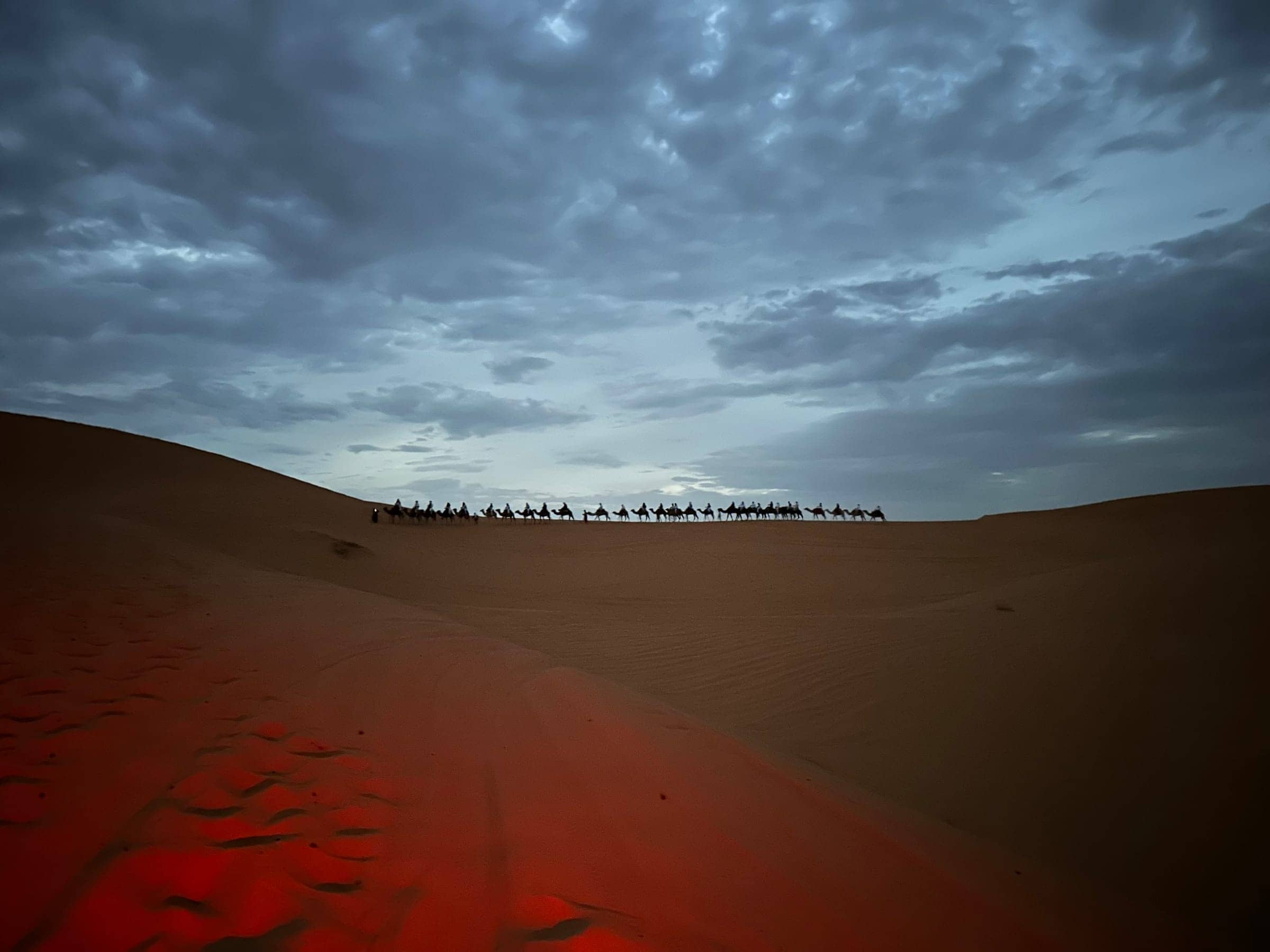
Riding through the dunes at camel height, quiet, slow, eye-level with the horizon, is genuinely unlike any other experience. There are no engine sounds. The only things you hear are your guide's voice, the camels' soft footfalls, and the desert wind. The silence gets inside you in a way that a 4x4 simply cannot replicate.
Berber guides who lead desert camel treks have often worked with the same animals for years. They know each camel's personality: which one is gentle with nervous riders, which one needs a firmer hand. Trust your guide's advice about which camel suits you, and don't hesitate to say if you feel uncomfortable at any point.
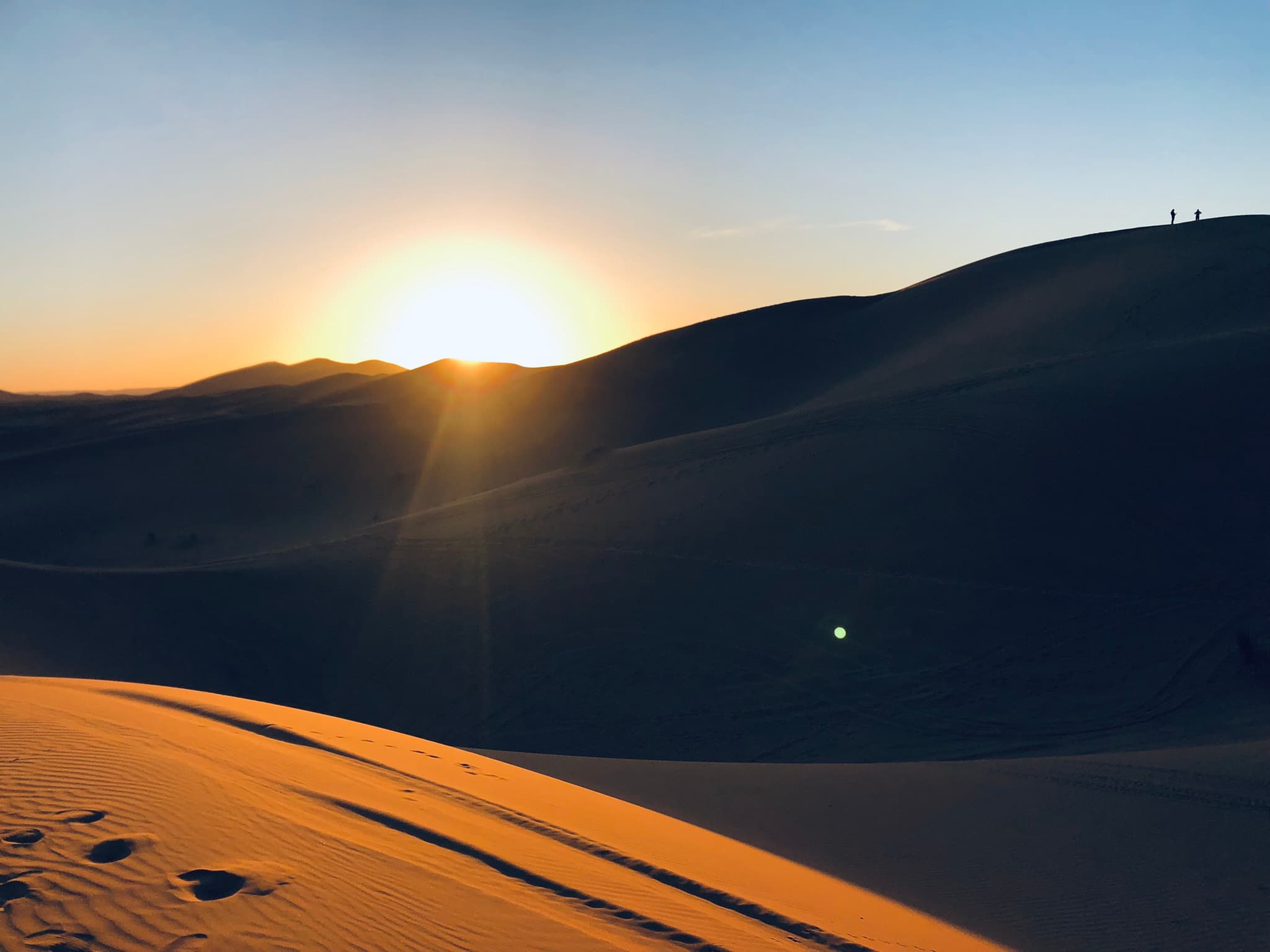
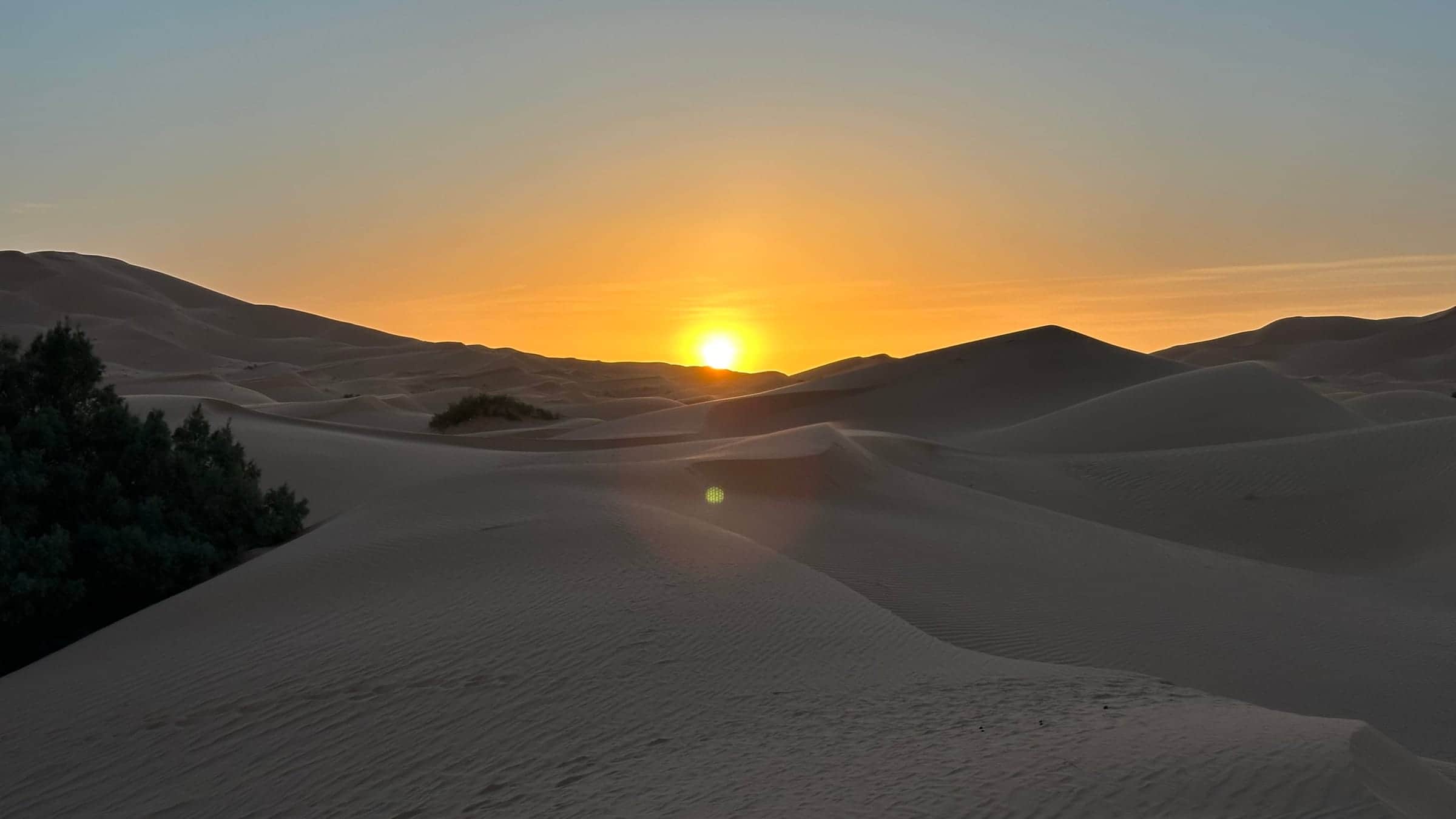
Most desert operators time the camel trek to arrive at the camp at or just after sunset. The ride toward the dunes as the sky shifts from blue to orange to dark red is the part people remember most vividly. Ask your operator specifically when the trek departs to make sure you will be in the dunes during the best light.
Loose, breathable trousers are far more comfortable than shorts or jeans on a camel saddle. Cover your arms against sun and wind. Bring a lightweight scarf: desert winds carry fine sand and a wrap around your face and neck makes the ride significantly more pleasant. And yes, the flowing blue robes the guides often wear are both traditional and genuinely practical.
Helpful Resources
Sahara Tours Related to This Guide
- 12-Day Grand Morocco Tour: Fes, Sahara Desert, Marrakech, Essaouira & Casablanca12 Days
- 12 Days Grand Morocco Imperial Cities & Sahara Desert Tour from Agadir12 Days
- 13-Day Morocco Imperial Cities & Sahara Desert Tour from Casablanca13 Days
- 15-Day Morocco Imperial Cities, Chefchaouen & Sahara Desert Adventure15 Days
Ready to Experience the Sahara?
Turn what you've just read into a real memory. Our Berber-led tours bring every story in this blog to life.
Mustapha Oufota
Berber desert guide and founder of Visit Sahara Desert, born and raised in the Draa Valley