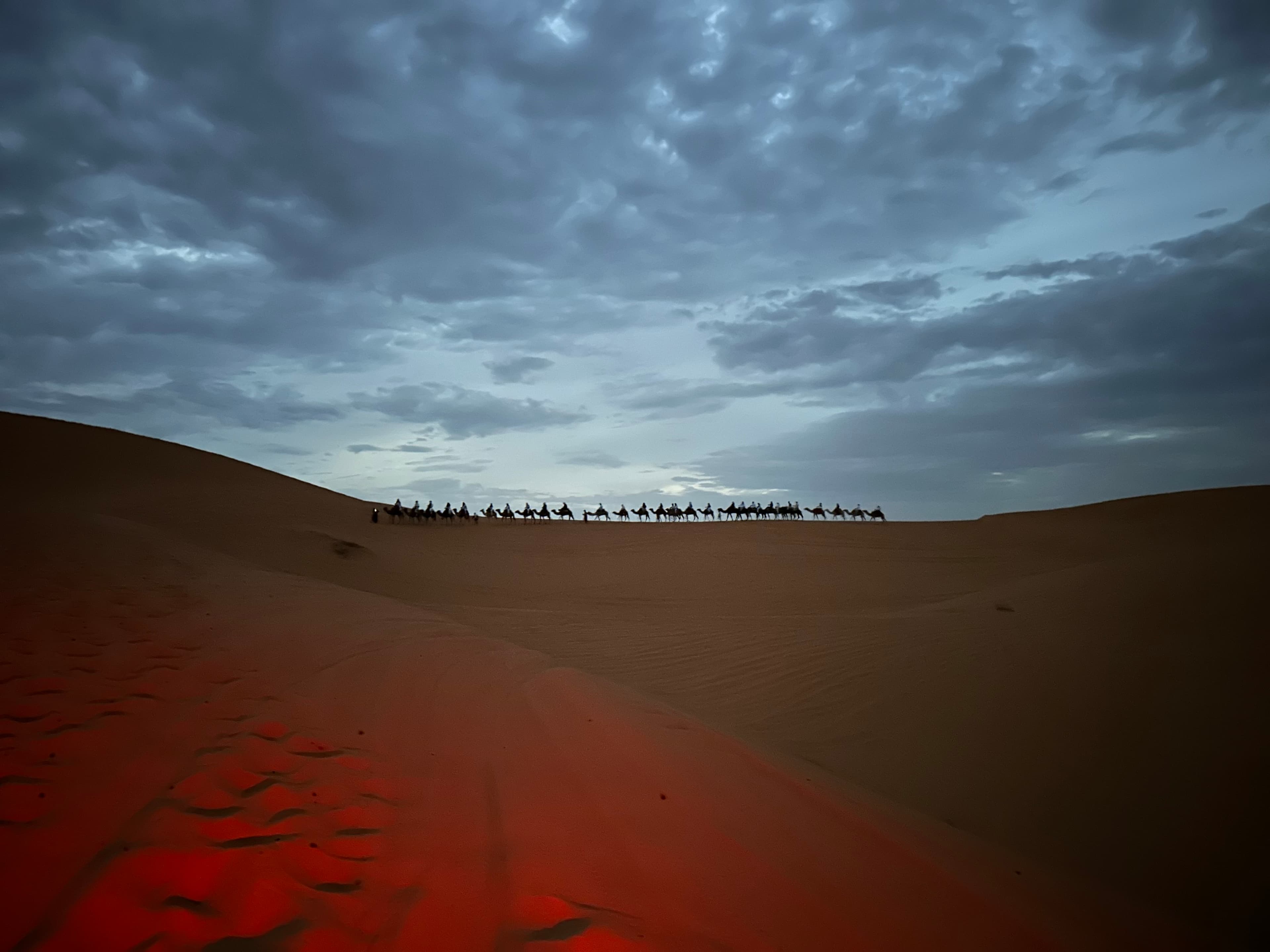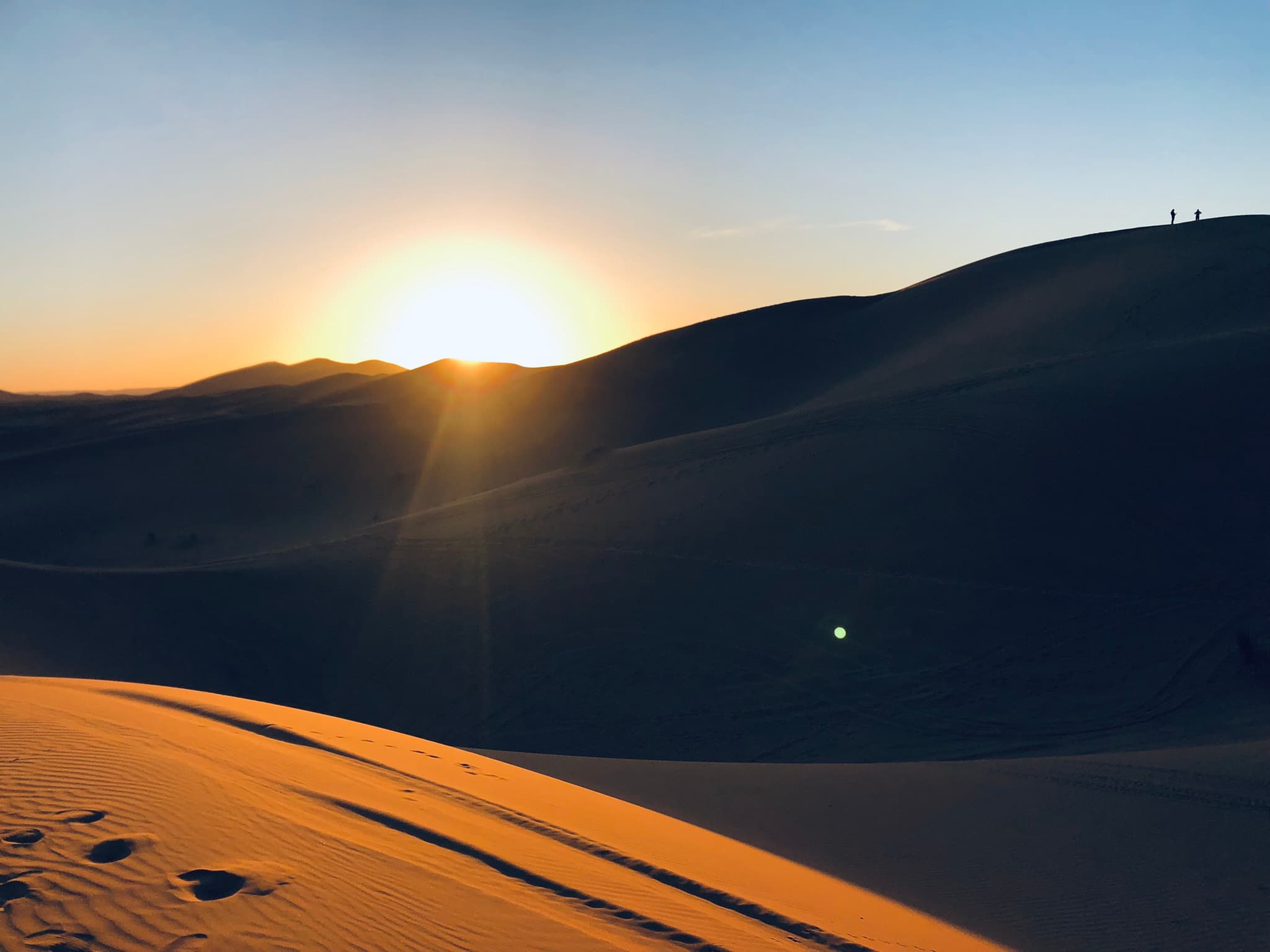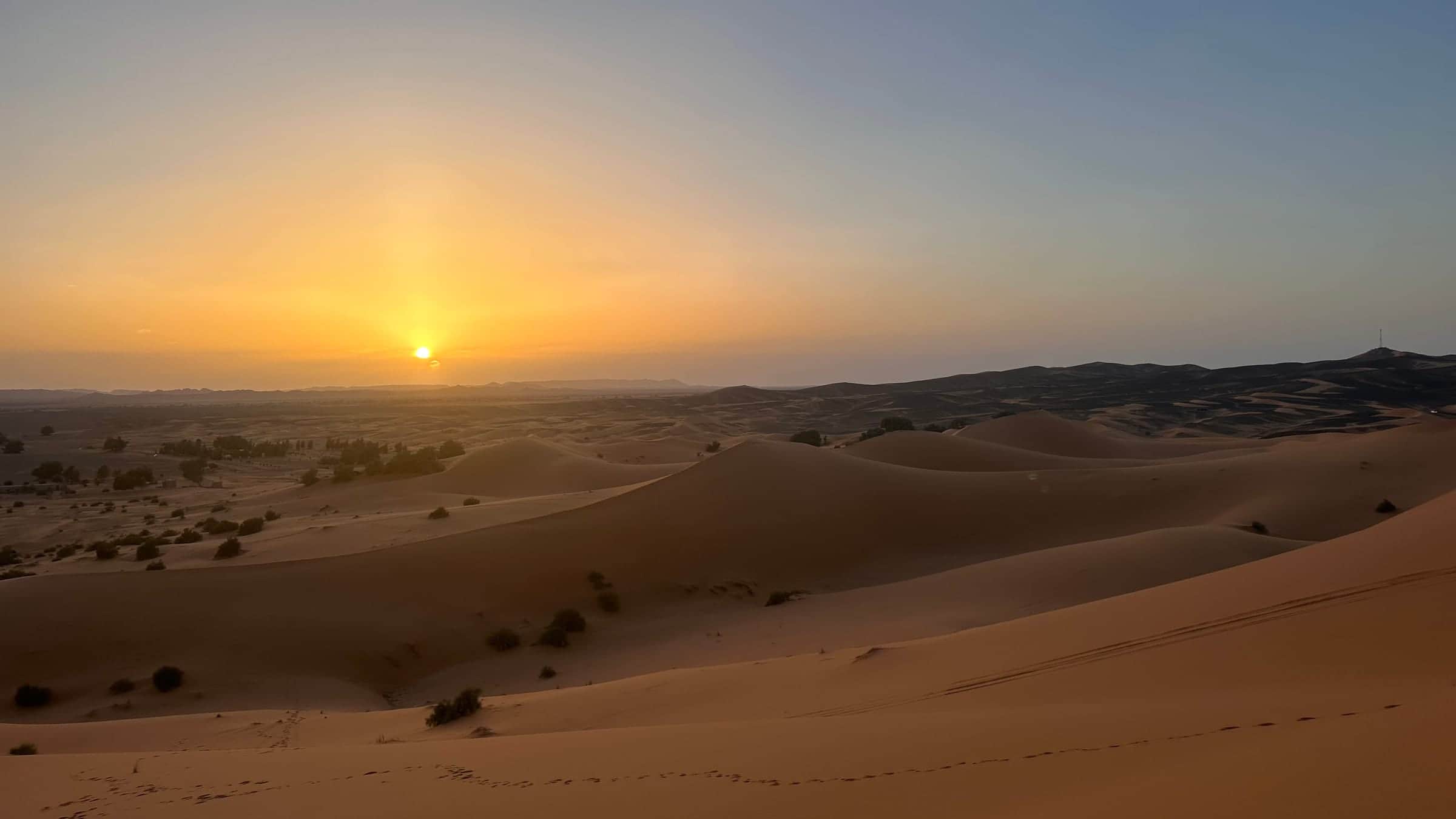
Sandboarding, riding down a sand dune on a board, is the Sahara's most exhilarating accessible activity. It requires no prior skill, no special fitness, and no expensive equipment. What it does require is a willingness to climb a very large hill and then throw yourself down it. Here is everything you need to know.
Sandboarding works on exactly the same principle as snowboarding: a hard or foam board strapped loosely to your feet, a steep slope, and gravity. The significant differences: sand is slower than snow (the friction is higher), so speeds are more manageable; the landing at the bottom is soft rather than hard-packed; and falling off is largely painless, if undignified. Most beginners on the Erg Chebbi dunes are able to make a successful descent on their first or second attempt.
Your desert camp or guide will provide sandboards. They range from simple plywood boards to purpose-built foam-core boards with foot straps: the quality varies significantly between operators. Ask specifically what type of board is provided. Better boards make a real difference to speed and control. Some operators also offer a "sledge" option, sitting on the board rather than standing, which is slower and less technical but accessible to anyone regardless of fitness or balance.
Not all dunes are suitable for sandboarding. You need a steep, long slip face with compact sand near the top and softer, deeper sand at the bottom. The slip faces on the east side of Erg Chebbi's main dune field are generally best: they are steepest in the morning after the wind has smoothed them overnight. Your guide will know which faces are in good condition on any given day. Never attempt to assess this yourself, dune conditions change daily and local knowledge is essential.
The part no one tells you about: climbing a 100-metre sand dune is exhausting. Sand gives way with every step, you sink back roughly half your stride length, so you effectively climb the dune twice. Take it slowly, zigzag rather than going straight up, and rest whenever you need to. The descent takes about thirty seconds. The climb takes fifteen to twenty minutes. Bring water. The view from the top is genuinely extraordinary, and the descent is worth every step of the ascent.
Wax the bottom of the board with candle wax or surfboard wax before descending, it makes a significant difference to speed. Lean slightly forward and keep your knees bent. Look down the fall line, not at your feet. If you feel yourself going too fast, dig the back edge of the board into the sand to slow down. If you fall, fall sideways rather than forward: a face-plant in dry Saharan sand is not as soft as it sounds. And wear your sunglasses: high-speed descents into the wind throw sand directly into your face.
Helpful Resources
Sahara Tours Related to This Guide
- 12-Day Grand Morocco Tour: Fes, Sahara Desert, Marrakech, Essaouira & Casablanca12 Days
- 12 Days Grand Morocco Imperial Cities & Sahara Desert Tour from Agadir12 Days
- 13-Day Morocco Imperial Cities & Sahara Desert Tour from Casablanca13 Days
- 15-Day Morocco Imperial Cities, Chefchaouen & Sahara Desert Adventure15 Days
Ready to Experience the Sahara?
Turn what you've just read into a real memory. Our Berber-led tours bring every story in this blog to life.
Mustapha Oufota
Berber desert guide and founder of Visit Sahara Desert, born and raised in the Draa Valley