Every person who visits the Sahara wants to capture what they see: the colours, the scale, the silence. The challenge is that the desert's most compelling qualities are difficult to photograph. Here is how professional travel photographers approach it.
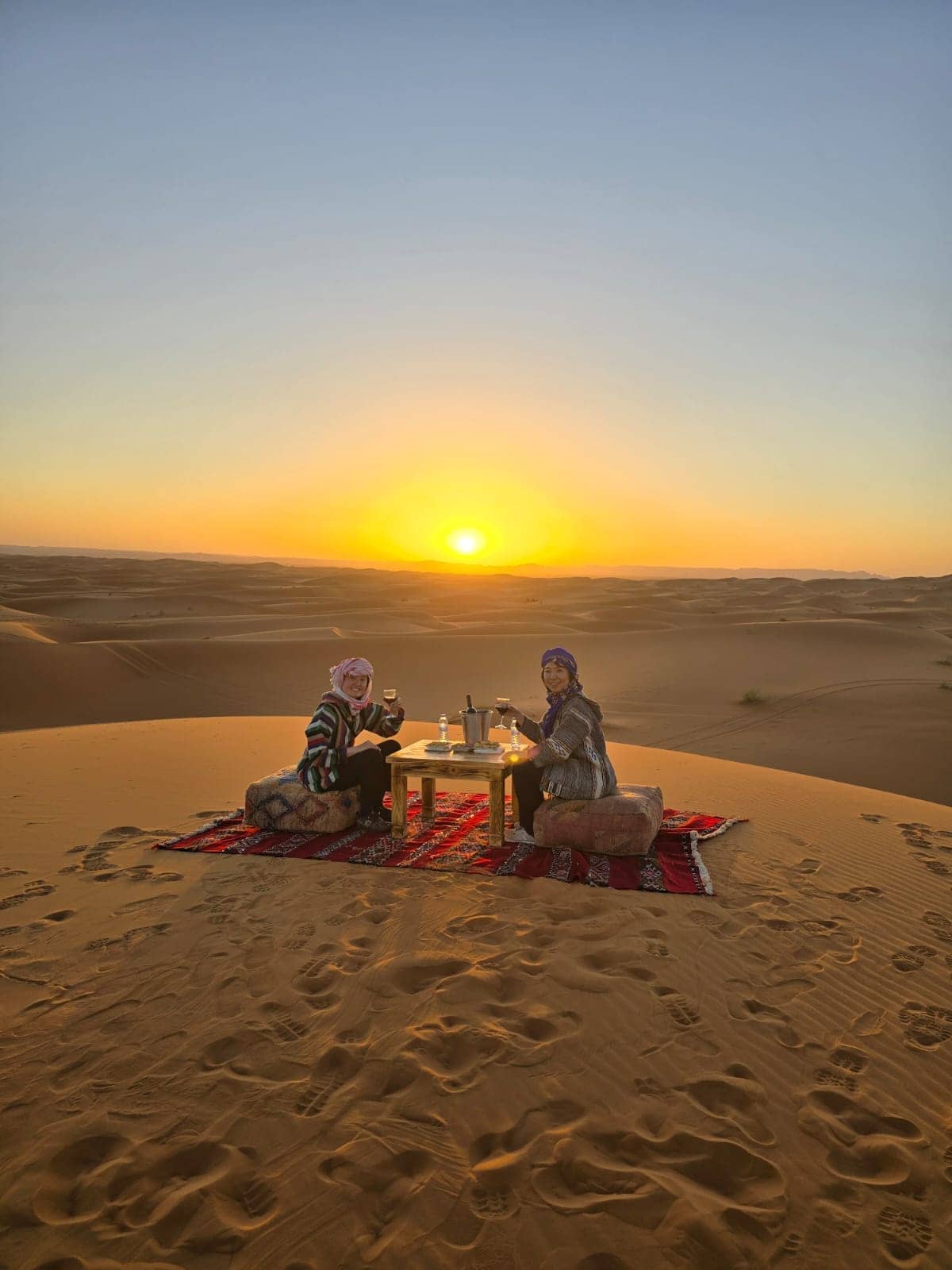
The midday Sahara is beautiful but flat: harsh overhead sun washes out the dune shadows that give the landscape its three-dimensional drama. The golden hour (one hour after sunrise and one hour before sunset) is when the dunes come alive with raking light, deep shadows, and the extraordinary warm palette of orange, red, and gold that makes Sahara photography so distinctive. Plan everything around these windows.
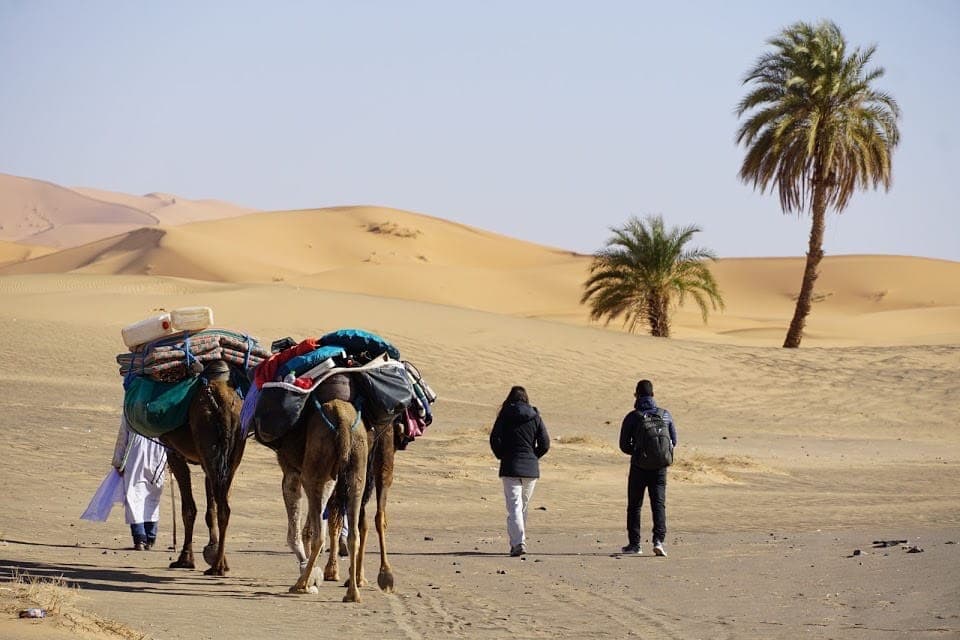
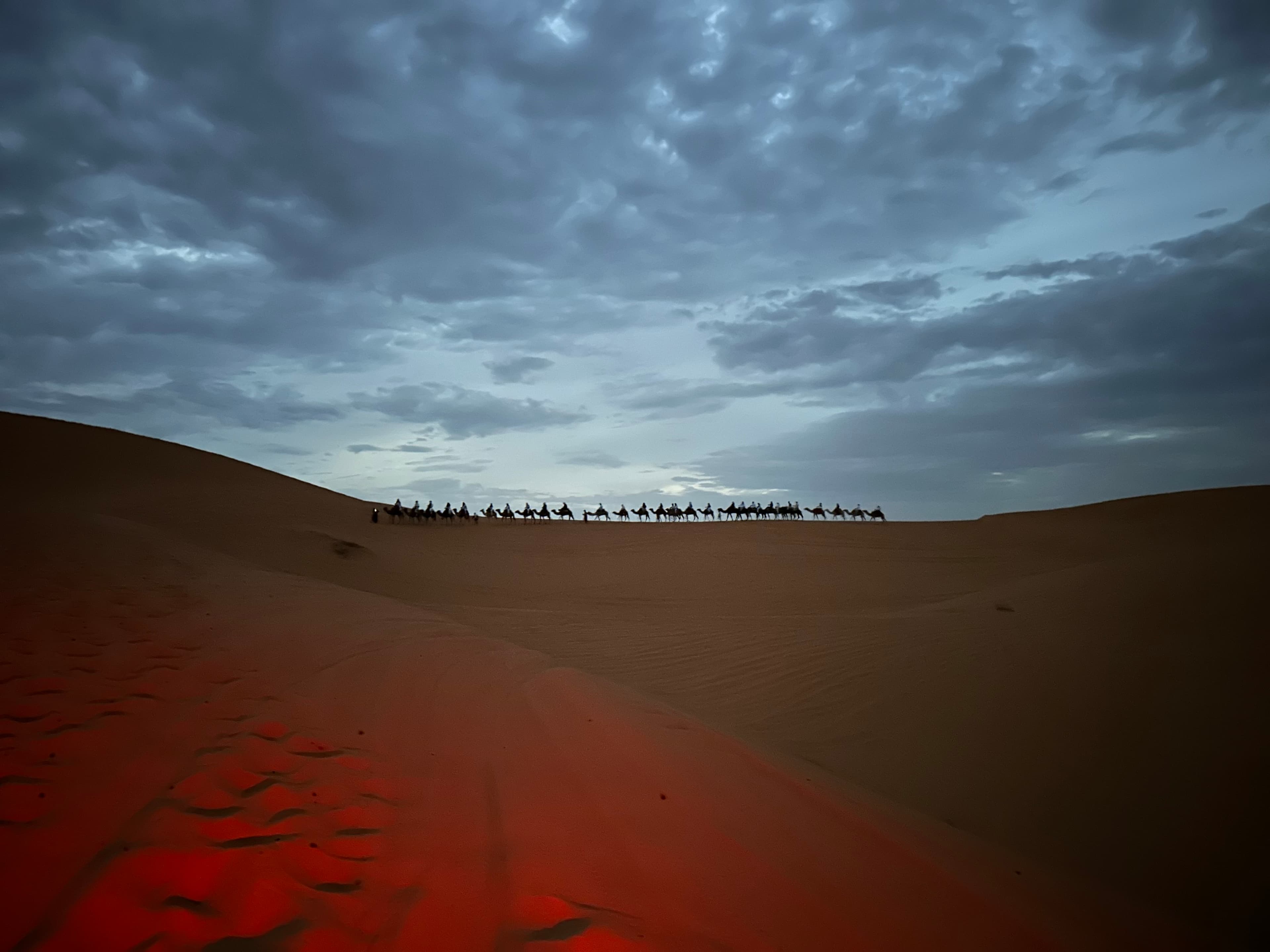
One of the most common mistakes in Sahara photography is filling the frame with everything at once. The desert's power lies in its emptiness. A single camel silhouette against a wide sky, a lone set of footprints disappearing over a ridge, one tree in a vast orange plain: these minimal compositions communicate the scale and solitude of the Sahara far more powerfully than busy, detailed frames.
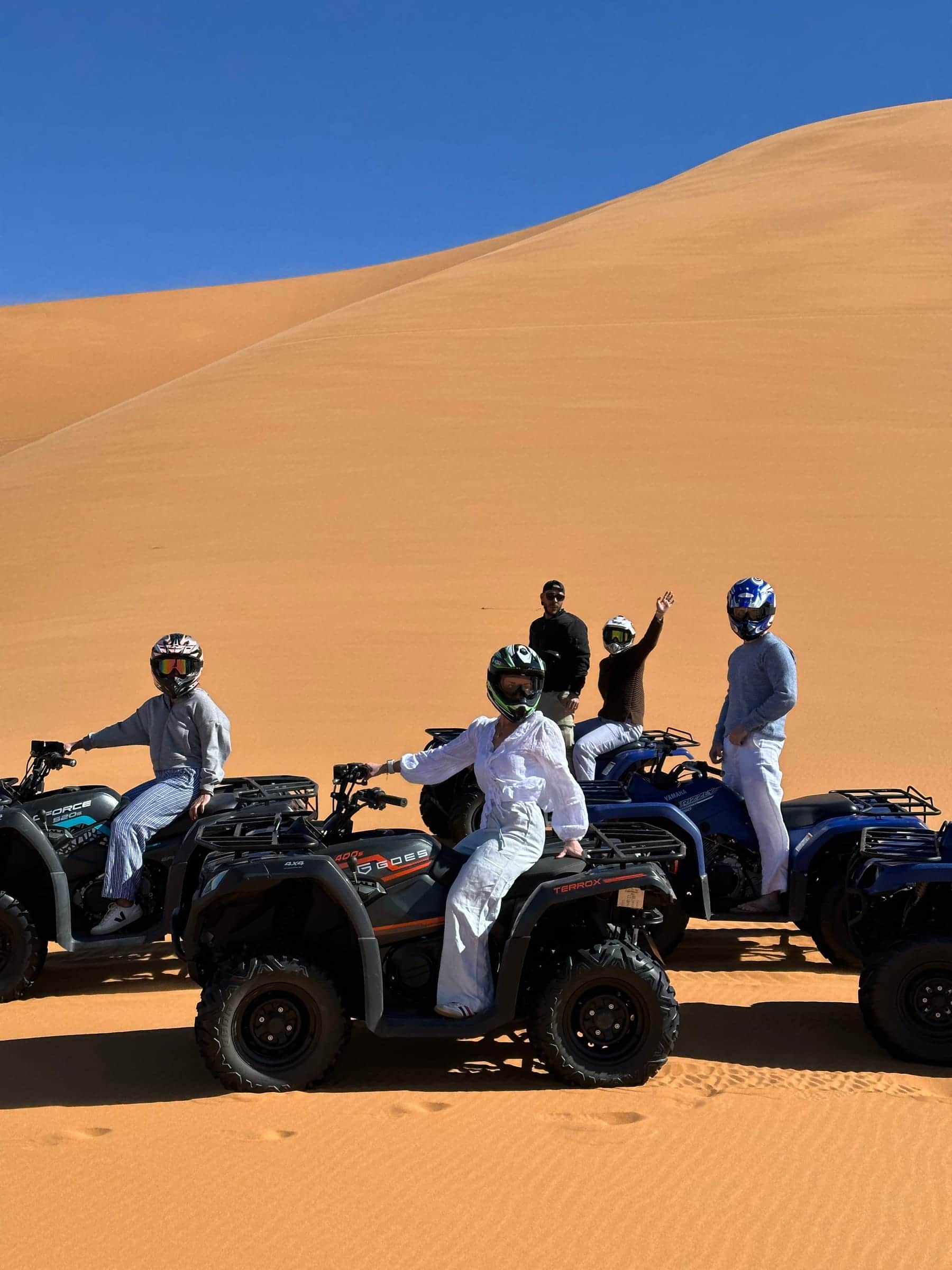
Dunes are sculptures. Their crests form precise curves, their slip faces create diagonal lines, their shadows form sweeping arcs. Look for these graphic elements and let them lead the eye through the frame. Getting low to the sand, shooting from ground level or from halfway up a dune, emphasises these lines and gives the image a sense of drama that shooting from standing height misses entirely.
Always ask before photographing people, and genuinely accept a refusal. The best desert portraits happen when there is a relationship between photographer and subject, a few minutes of conversation, a shared cup of tea. Your guide can help introduce you and bridge the language gap. Portraits taken with permission and connection are always better than stolen shots.
Sand is the enemy of camera equipment. Seal your bag when not shooting. Change lenses inside a tent or with your back to the wind. Carry a blower brush and lens cloth at all times. A UV filter on your lens gives you a layer of protection against airborne sand without affecting image quality. If you only have one camera and lens in the desert, prime lenses are more resilient than zooms in sandy conditions.
The Sahara has some of the darkest, clearest skies on earth. For Milky Way photography, you need a wide-angle lens (24mm or wider), a full-frame sensor if possible, an aperture of f/2.8 or wider, an ISO between 1600 and 6400, and a shutter speed of around 20 seconds. Use manual focus and set it to infinity. A tripod is non-negotiable. The results, in the right conditions, are extraordinary.
Helpful Resources
Sahara Tours Related to This Guide
Ready to Experience the Sahara?
Turn what you've just read into a real memory. Our Berber-led tours bring every story in this blog to life.
Mustapha Oufota
Berber desert guide and founder of Visit Sahara Desert, born and raised in the Draa Valley