There is a moment that happens every night in the Sahara, sometime around ten o'clock, when the last of the camp fire embers die down and the desert goes completely, profoundly dark. No street lights. No glow on the horizon. Nothing between you and about four billion stars. This is what that night feels like.
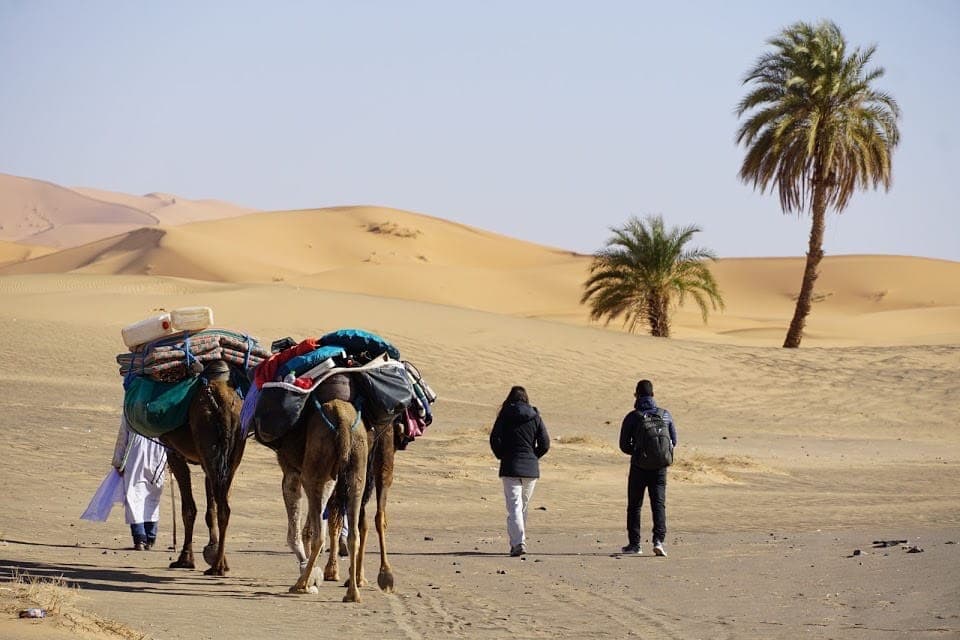
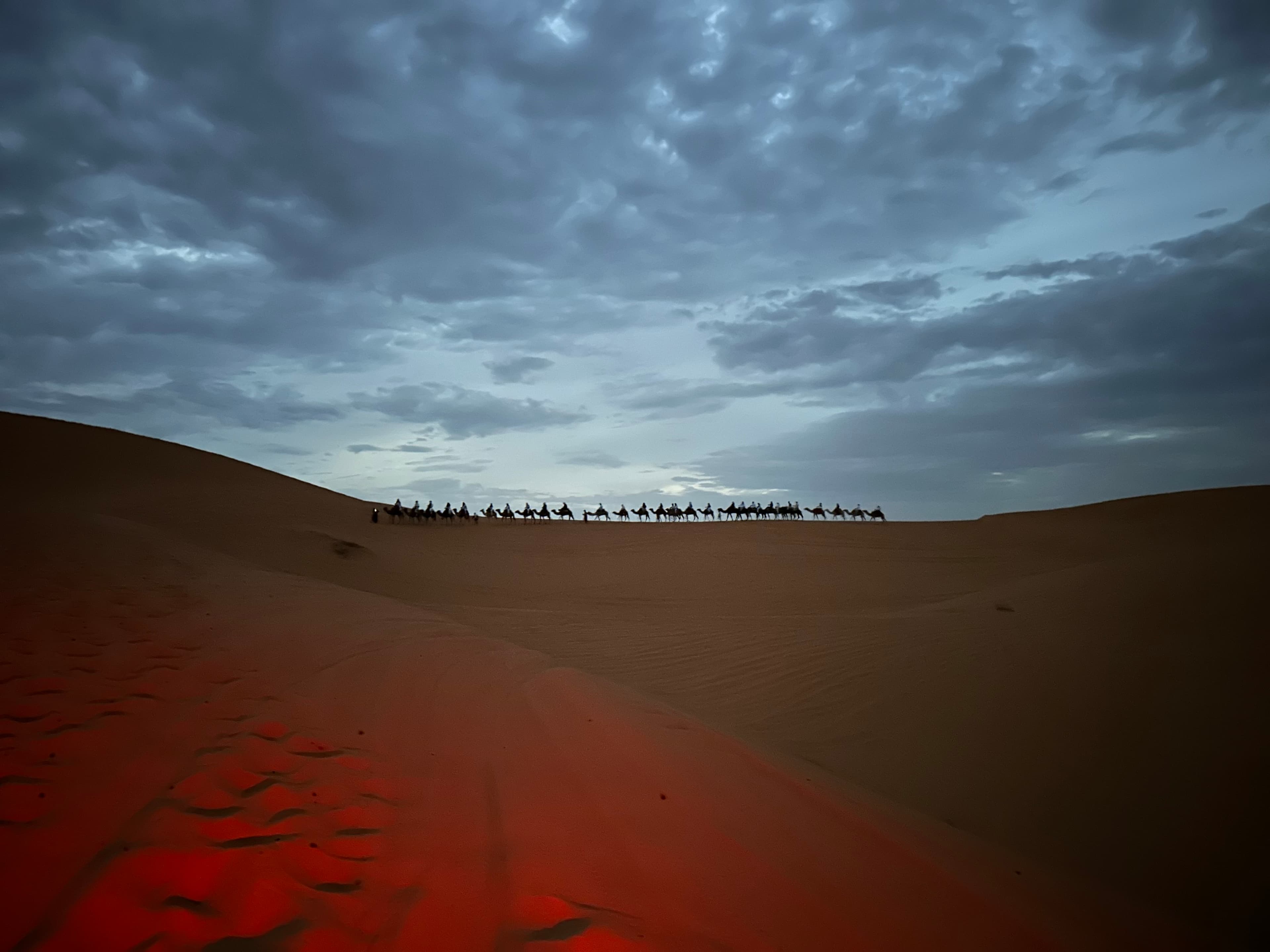
The camel trek in from Merzouga takes about forty minutes. You set off just before the sun begins to drop, and you watch it sink below the horizon from the back of a kneeling camel while your guide leads you along the base of the main dune field. By the time you arrive at camp, the sky has gone through five shades of red and is shifting into deep violet.
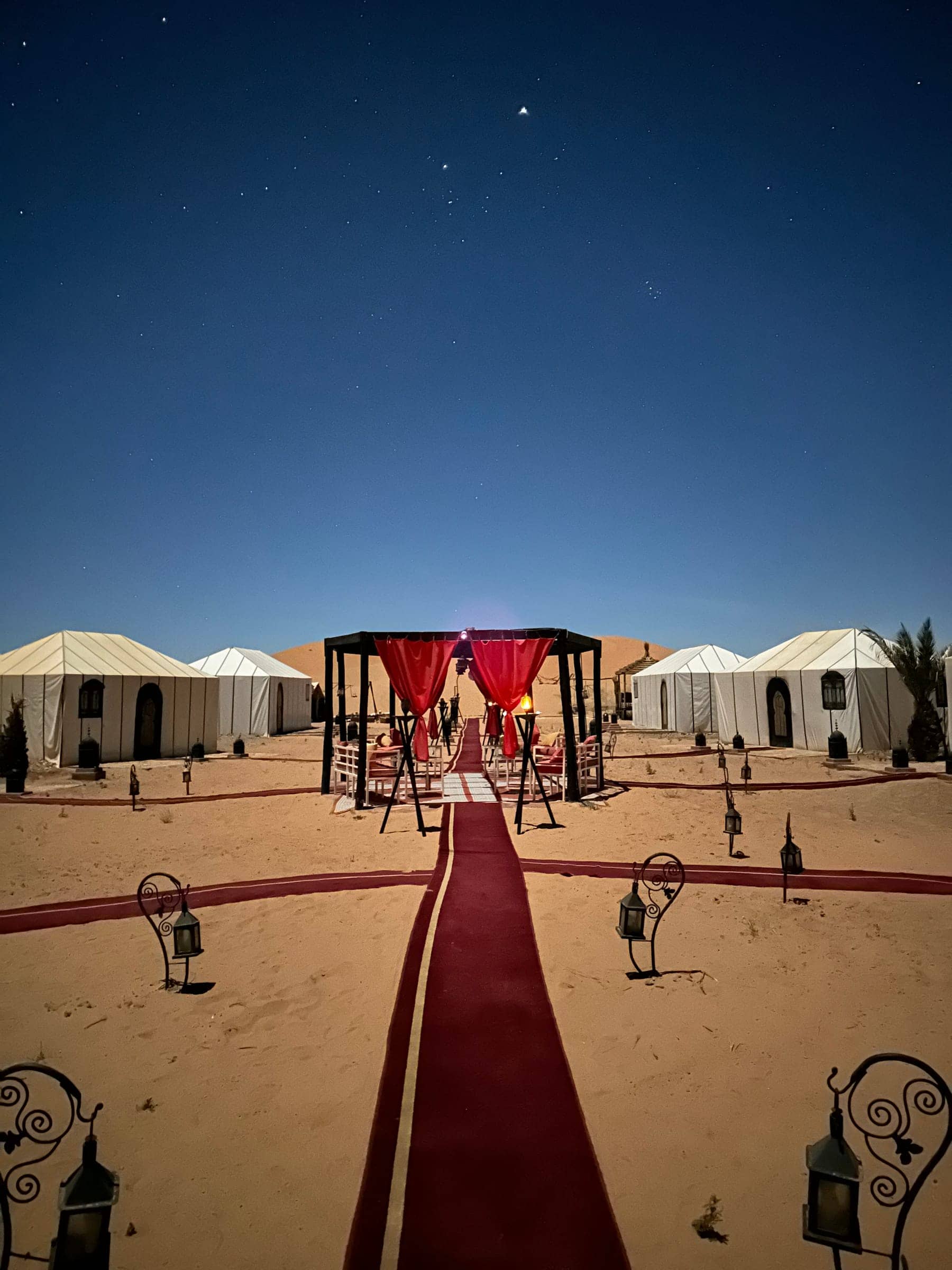
Ours was a traditional Berber camp: a ring of low canvas tents around a central fire pit, with hand-woven rugs on the floor and lanterns made from pierced metal that cast patterns of light across the sand. There was tea before anything else. Three rounds of it, each poured from a great height to create the ceremonial foam. Accepting all three cups is the correct thing to do.
After dinner, tagine cooked over charcoal, with bread baked in the sand beneath the fire, our guides brought out a guembri and a set of hand drums. The Gnawa rhythms they played are ancient, hypnotic, and suited exactly to sitting in sand in the dark. One of the guides sang in Tamazight, the Berber language, and translated the words afterward: a song about the desert wind and a traveller who never finds his way home because the desert has claimed him.
When the music ended and the fire died, we lay on rugs on the open sand and looked straight up. The Milky Way was so bright it looked three-dimensional, not a smear of light but a structure, an architecture of stars that stretched from one edge of the visible sky to the other. The silence was total except for the occasional shift of sand in the wind. It is not possible to feel small in a comfortable way in many places. The Sahara is one of them.
Our guide woke us at five. No alarm, just a quiet hand on the shoulder and "sunrise in one hour." We climbed the main dune in darkness, sliding back half a step for every step forward in the soft sand. At the top, we sat in silence and waited. The sky turned grey, then pink, then an extraordinary burnt orange that set the entire dune field glowing. No photograph I have seen does it justice. None taken that morning did either.
People ask what the Sahara is like. It is easier to say what it does: it slows you down. It strips away the noise. It puts your life in a perspective that is both humbling and strangely comforting. A night under those stars does not solve your problems, but it does make them seem, for a while, the right size.
Helpful Resources
Sahara Tours Related to This Guide
Ready to Experience the Sahara?
Turn what you've just read into a real memory. Our Berber-led tours bring every story in this blog to life.
Mustapha Oufota
Berber desert guide and founder of Visit Sahara Desert, born and raised in the Draa Valley