First-time visitors to the Sahara often expect dramatic wildlife encounters: they are sometimes disappointed, because desert animals are masters of concealment and mostly nocturnal. But once you know where to look and when, the desert reveals itself as a surprisingly rich ecosystem. Here is what you might see.
The fennec fox is the most beloved animal of the Sahara and the most sought after by travellers. Its enormous ears, evolved to dissipate heat and to hear insects and small animals underground, make it immediately recognisable. Fennecs are entirely nocturnal, spending the day in cool burrows they dig in firm sand. Your best chance of spotting one is on a guided night walk from camp, when they sometimes appear at the edge of the fire light. Their tracks in the morning sand are a more reliable sighting.
The Sahara is home to over 100 species of reptile, including the sand viper (characterised by the distinctive side-winding motion it uses to move across loose sand), the spiny-tailed agama lizard (which can reach 60cm and is one of the few herbivorous lizards in the world), and the desert monitor, a large, impressive predator that can reach 1.5 metres. Reptiles are most active in the early morning and late afternoon when temperatures are moderate. In summer, most retreat underground during the midday heat.
Desert birding is a niche but rewarding pursuit. Species to look for include the cream-coloured courser (a sand-coloured ground bird that runs rather than flies), the desert lark, and various sandgrouse species that make extraordinary daily journeys of up to 150km to find water. Migrating birds also pass through the Sahara in large numbers in spring and autumn, making the desert region an important stop on the Europe-Africa flyway. Oases attract extraordinary concentrations of migrants in October and November.
Smaller and paler than its European cousin, the desert hedgehog is a nocturnal insectivore that has adapted to survive with very little water, obtaining most of its moisture from the insects and scorpions it eats. If you are camping in the desert, a desert hedgehog investigating the edge of your camp in the night is a genuinely charming encounter. They are curious, largely unafraid of humans, and move with a surprisingly purposeful determination.
Scorpions are common in the Sahara, and the yellow fat-tailed scorpion (Androctonus australis) found in North Africa is genuinely dangerous, its venom can be lethal. Always shake your shoes before putting them on in the morning. Do not walk barefoot at night around camp. When lifting rocks or moving equipment, use a stick first. That said, scorpion stings from properly guided desert tours are extremely rare, your guide will know how to minimise risk and what to do in the unlikely event of a sting.
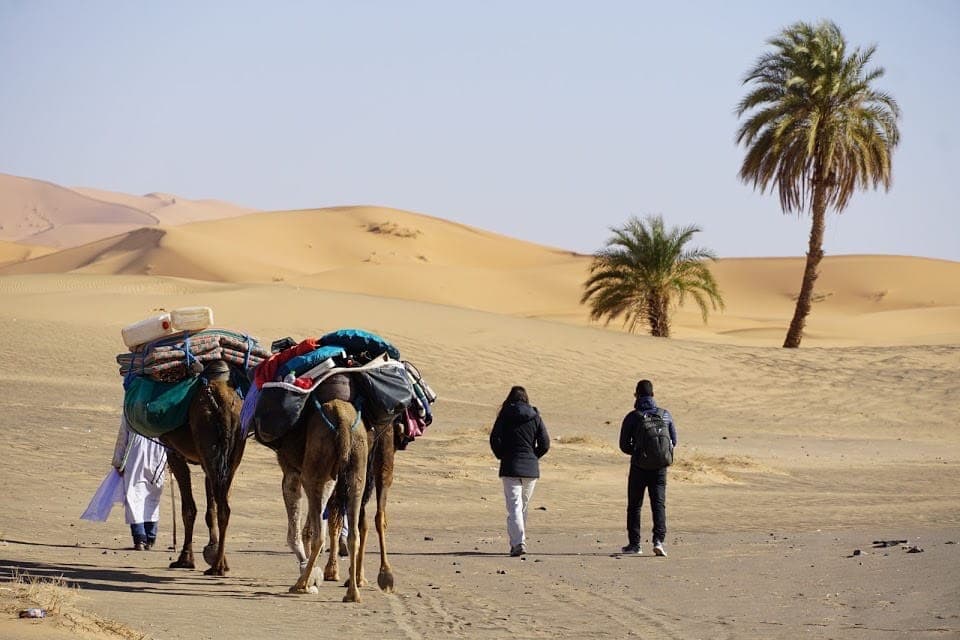
Wild camels no longer exist in the Sahara, all dromedaries here are domesticated, owned by Berber families who have been bred and worked these animals for generations. But the relationship between the Berber desert people and their camels is so ancient and so woven into daily life that watching a guide care for his camel, checking its feet after a trek, speaking to it in Tamazight, knowing its mood from its posture, feels like observing something very close to a wild human-animal bond.
Sahara Tours Related to This Guide
Ready to Experience the Sahara?
Turn what you've just read into a real memory. Our Berber-led tours bring every story in this blog to life.
Mustapha Oufota
Berber desert guide and founder of Visit Sahara Desert, born and raised in the Draa Valley