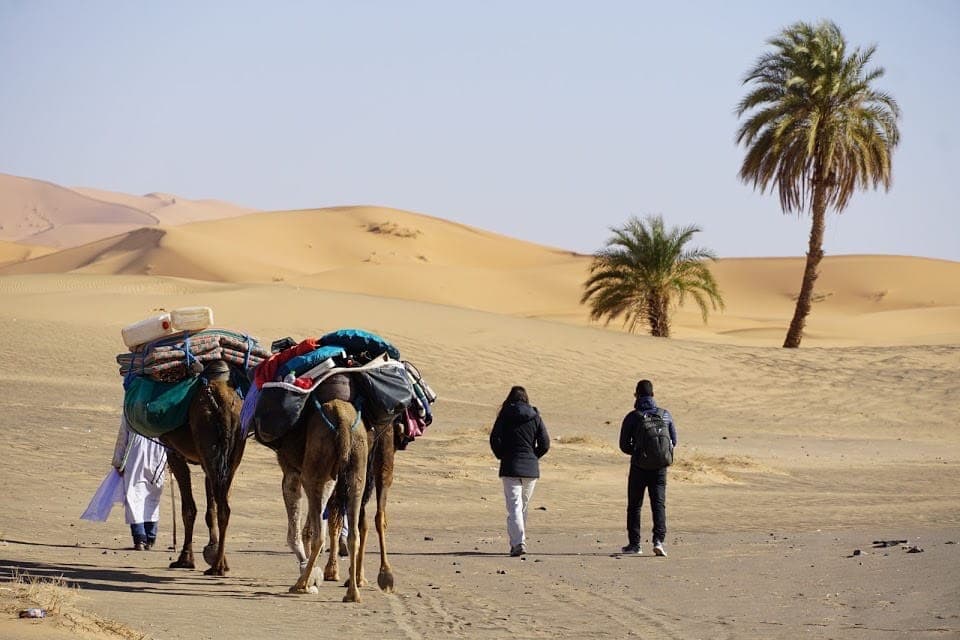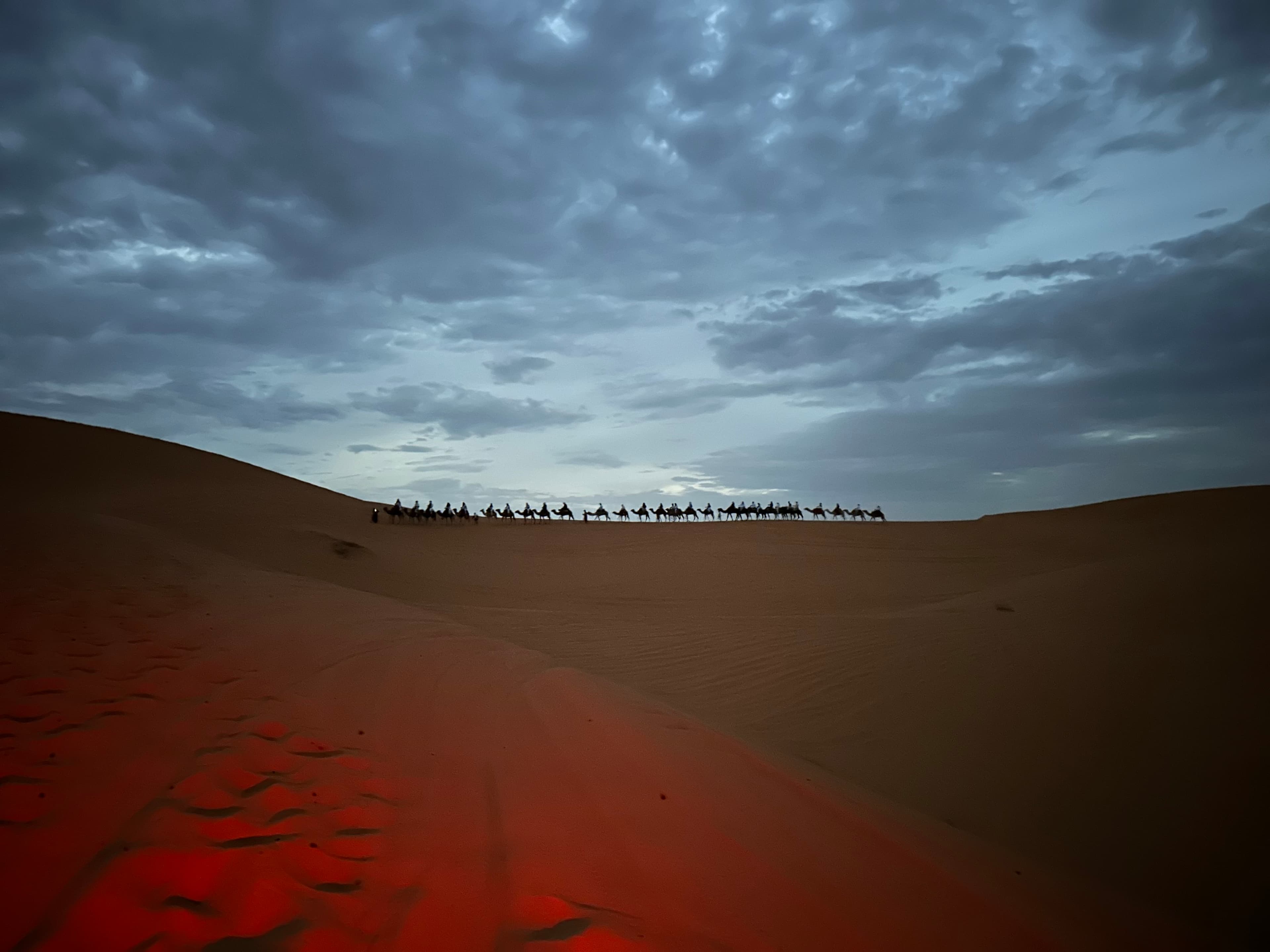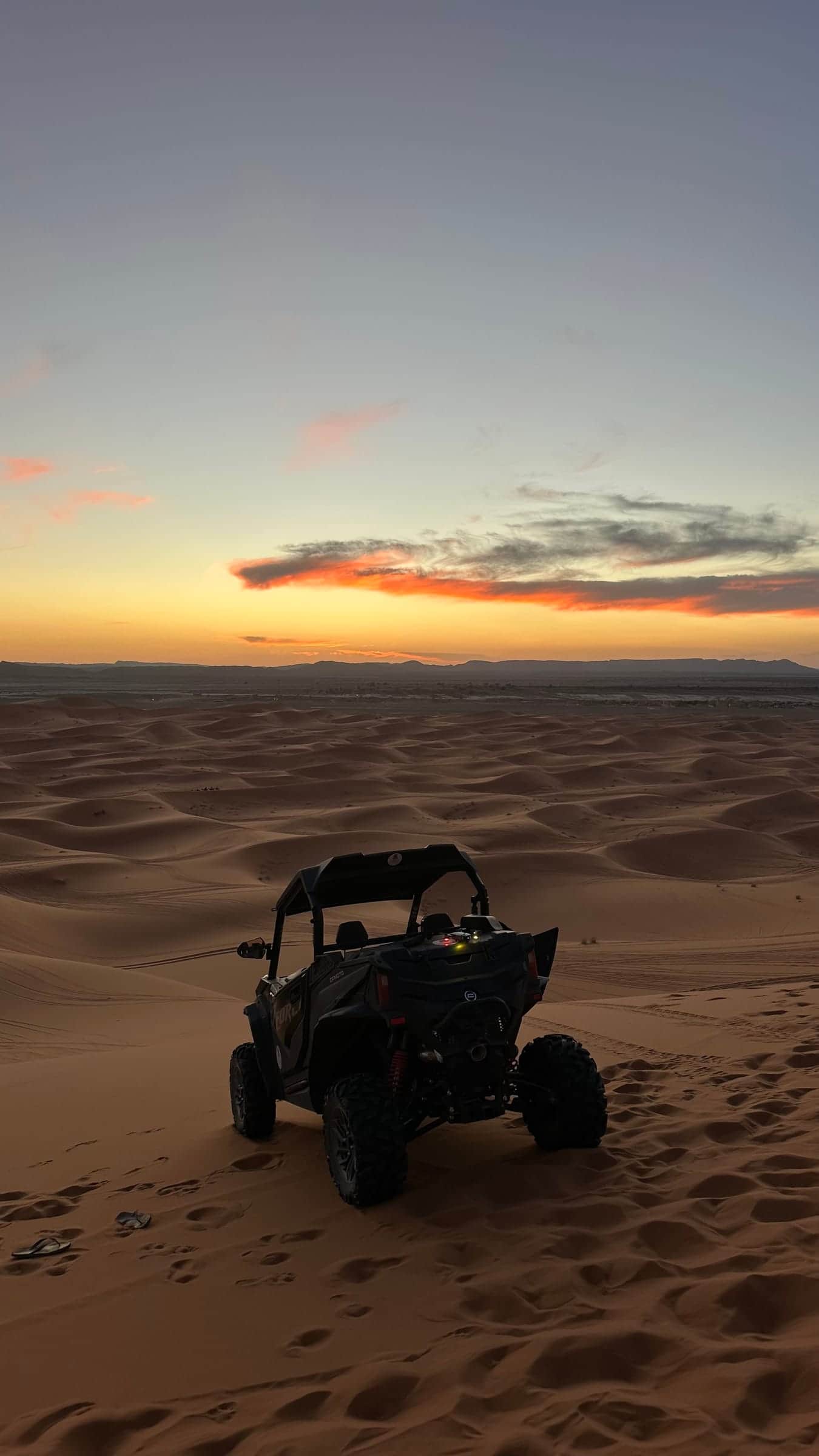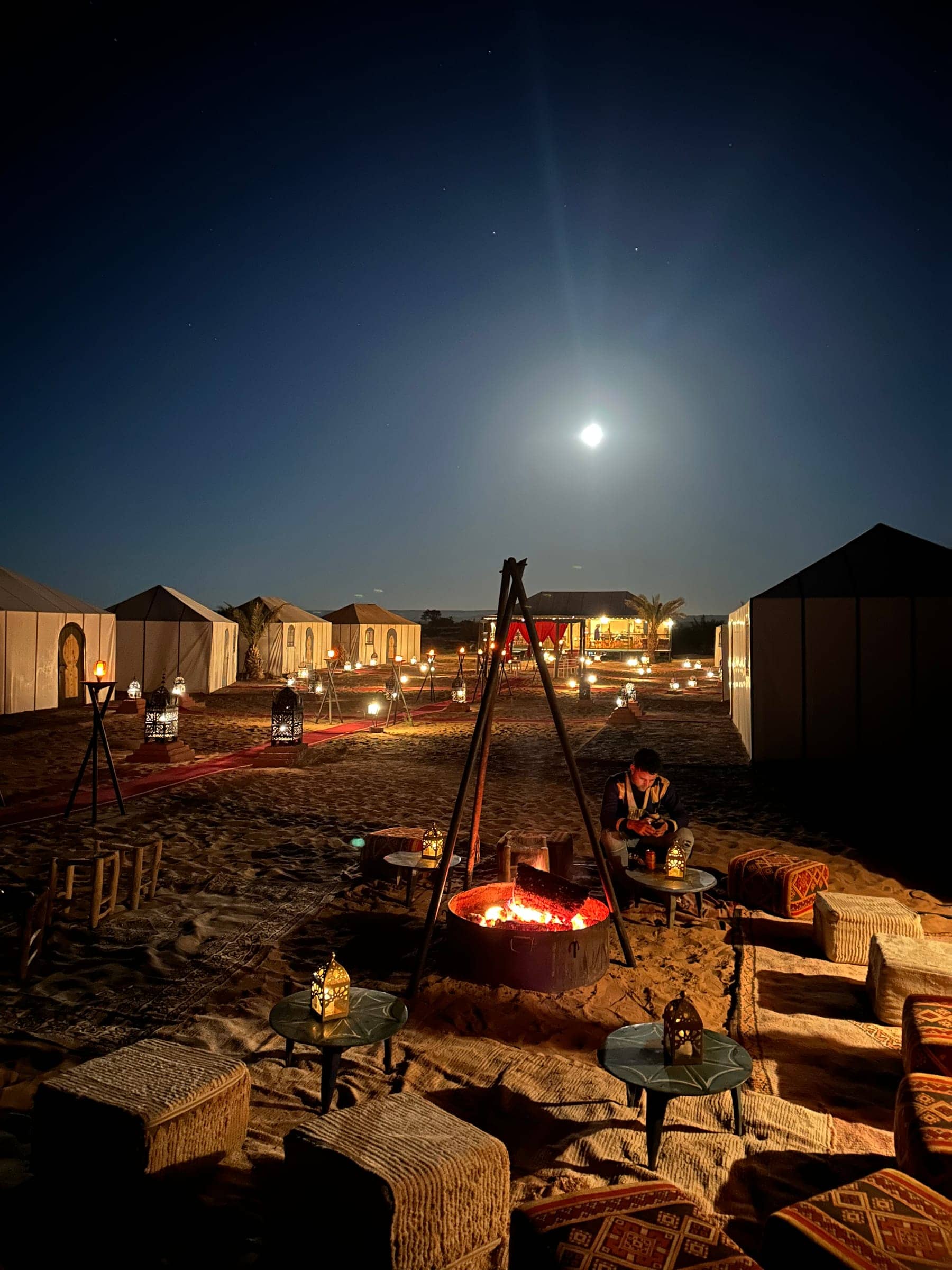
Children who visit the Sahara tend to describe it as the best thing they have ever done. The sand, the camels, the campfire stories, the stars. Parents tend to worry more than necessary and enjoy it more than they expected. Here is how to plan a desert trip that works brilliantly for all ages.
Children from about five or six can manage a desert trip very well. Younger than that, the combination of heat, unfamiliar food, disrupted sleep, and physical activity (dune climbing is genuinely tiring) can make the experience stressful rather than joyful. Teenagers, on the other hand, tend to find the Sahara transformative: the lack of WiFi they feared becomes, after a day, a relief. The best age group for desert travel is probably 8–16.
For families, October, November, March, and April are the only safe options. Summer in the Sahara is dangerous for children: the heat is too intense and the risk of heat exhaustion is real. The Easter school holiday period (late March to mid-April) is popular for families precisely because temperatures are warm but manageable and the school calendar cooperates. Book early: family-friendly camps at Easter fill quickly.
Sandboarding is a revelation for most children, climbing a dune with a board and sliding down the steep face at speed is exhilarating and requires absolutely no technical skill. Camel riding is universally loved. Campfire cooking, particularly the sand-baked bread, captures the imagination of children who have never cooked without an oven. And the star-gazing: most children in Europe and North America have never seen the Milky Way. Seeing it for the first time is a formative experience.
Children dehydrate faster than adults in the desert and often don't feel thirsty until they are already dehydrated. Make water drinking a game, set hourly reminders, give each child their own labelled water bottle. Apply sunscreen every two hours, including on the backs of hands, the ears, and the nape of the neck. Bring antihistamine cream: some children react to the unfamiliar plant pollen in desert oases. A children's headlamp for night-time navigation around camp is an excellent morale booster.
Not all desert camps are well-suited to children. Look for camps that have separate sleeping areas (children and parents often have different rhythms at camp), reliable bathroom facilities, and guides who are experienced with family groups. Ask specifically whether the guides have worked with children before and what activities they provide. The best family camps feel like an adventure, not an endurance test.
Helpful Resources
Sahara Tours Related to This Guide
Ready to Experience the Sahara?
Turn what you've just read into a real memory. Our Berber-led tours bring every story in this blog to life.
Mustapha Oufota
Berber desert guide and founder of Visit Sahara Desert, born and raised in the Draa Valley