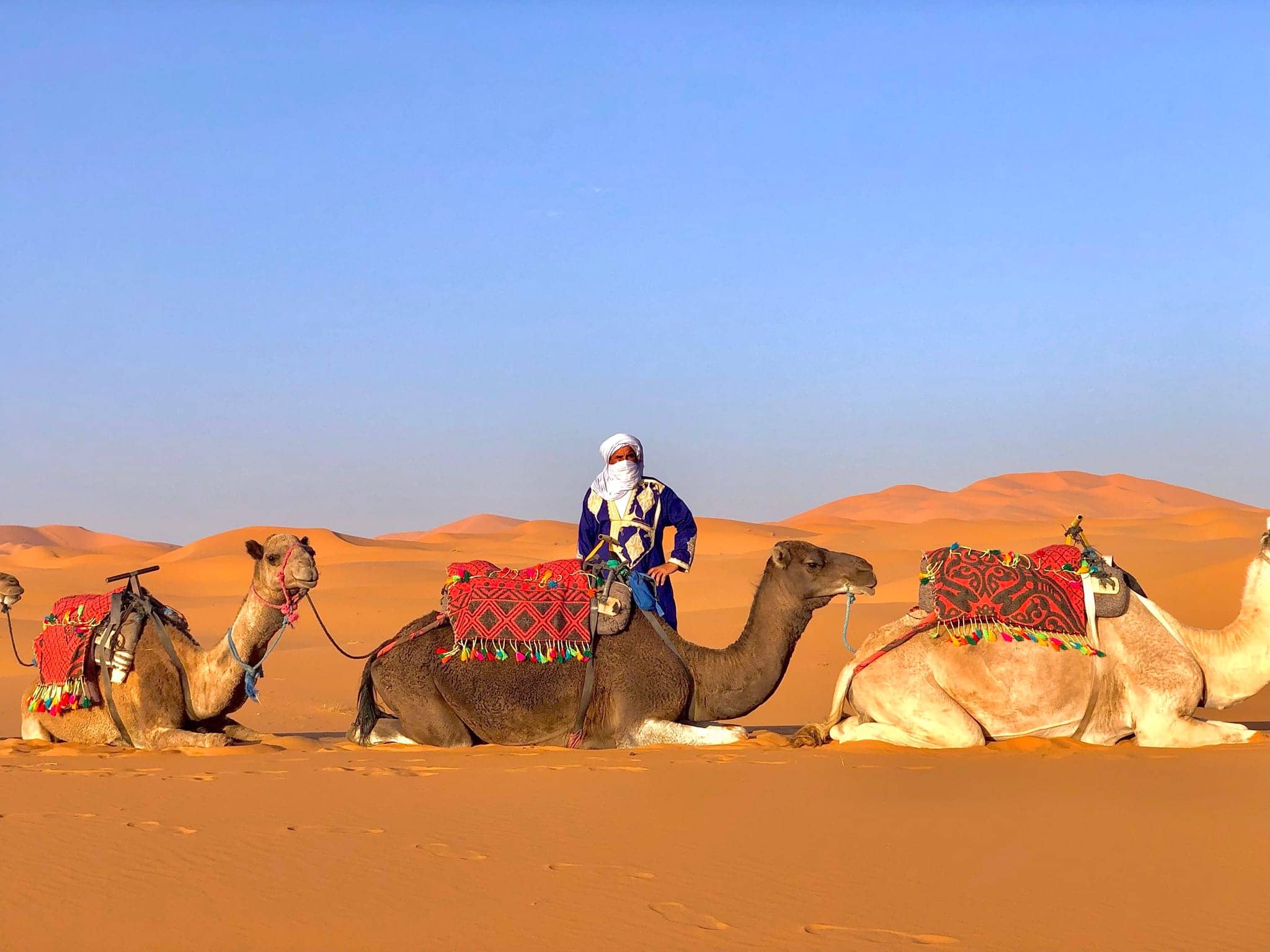
The Sahara Desert is often imagined as a barrier between north Africa and the continent below. In fact, for more than two thousand years, it was one of the world's great highways: a trading network that moved goods, ideas, and people across the largest desert on earth with extraordinary sophistication.
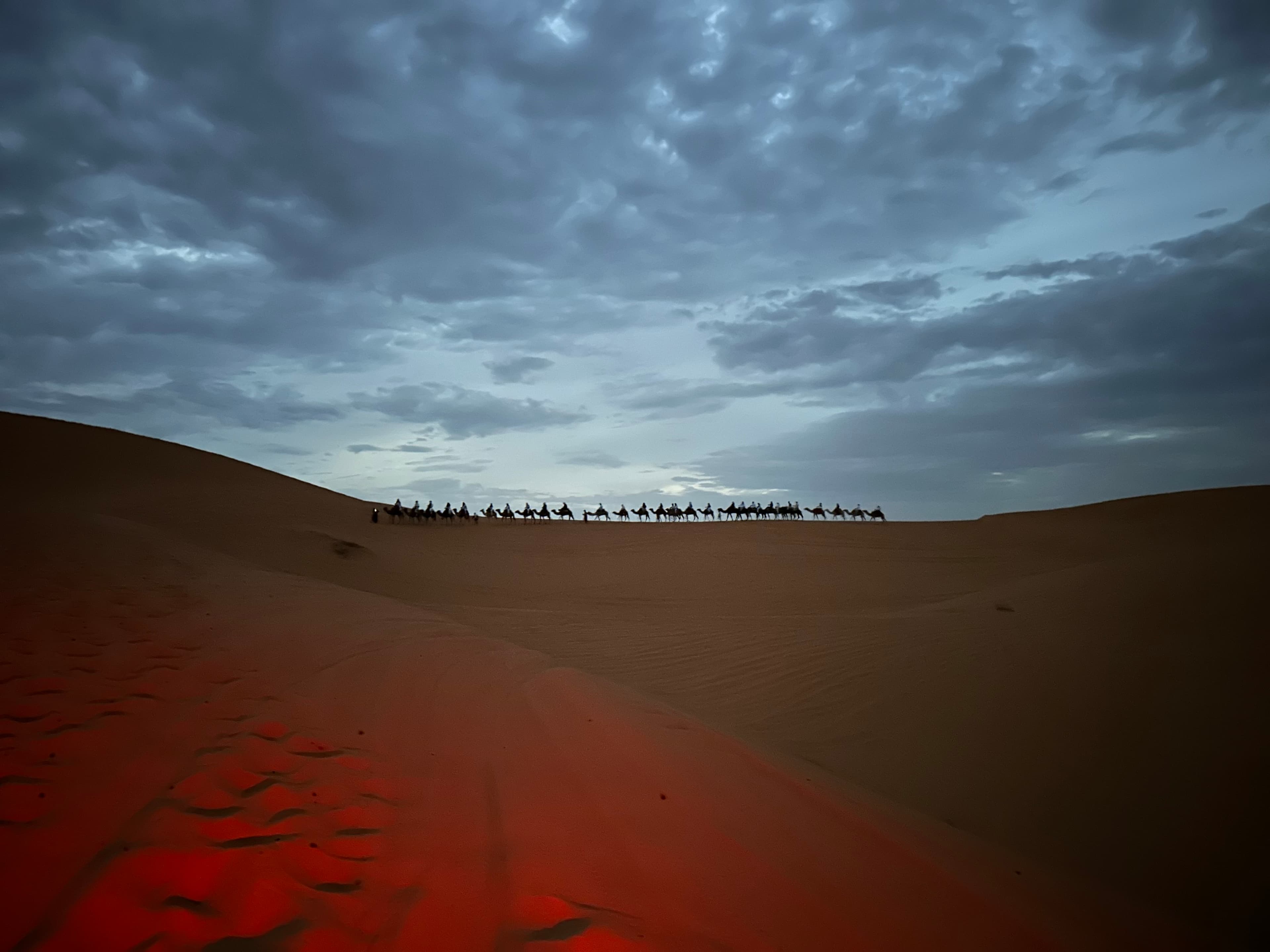
The trans-Saharan trade reached its peak between the 8th and 16th centuries CE, though the routes were active long before and after. Caravans heading north carried gold from the empires of Mali and Ghana, ivory, slaves, kola nuts, and later, cotton textiles. Heading south, the merchants brought salt, so valuable it was exchanged weight-for-weight with gold, as well as copper, horses, glass beads, and books. The trade was what built cities like Timbuktu, Sijilmasa (near modern Rissani, close to Merzouga), and Ghadames.
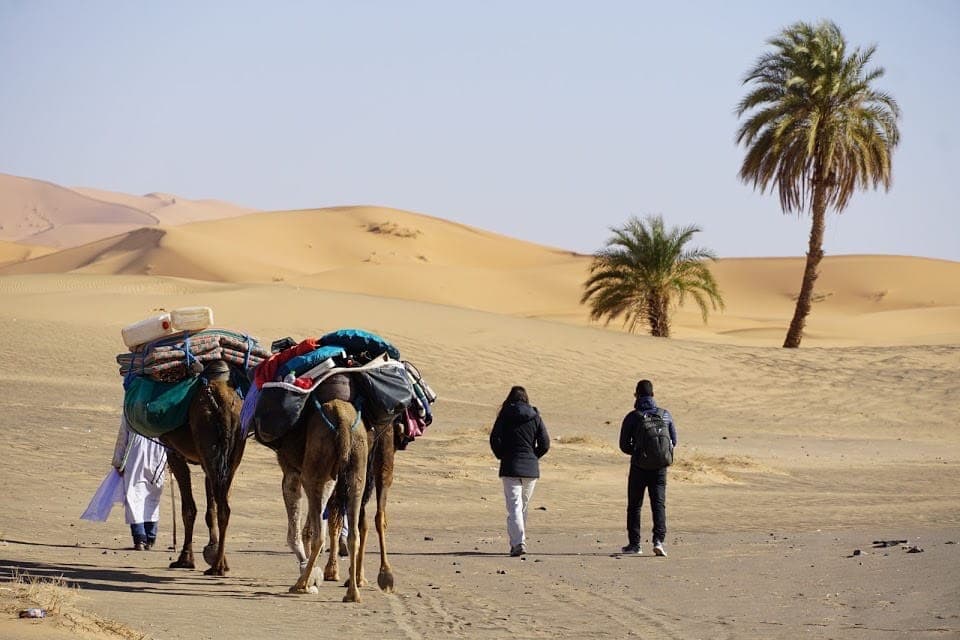
The trans-Saharan trade only became viable when the Bactrian and dromedary camel, introduced to North Africa around the 3rd century CE, replaced horses and donkeys as the primary transport animal. A camel can carry 300kg, travel up to 40km per day, and survive without water for two weeks in cool weather. These qualities turned the Sahara from a barrier into a passable sea, and the camel caravan into the equivalent of a cargo ship.
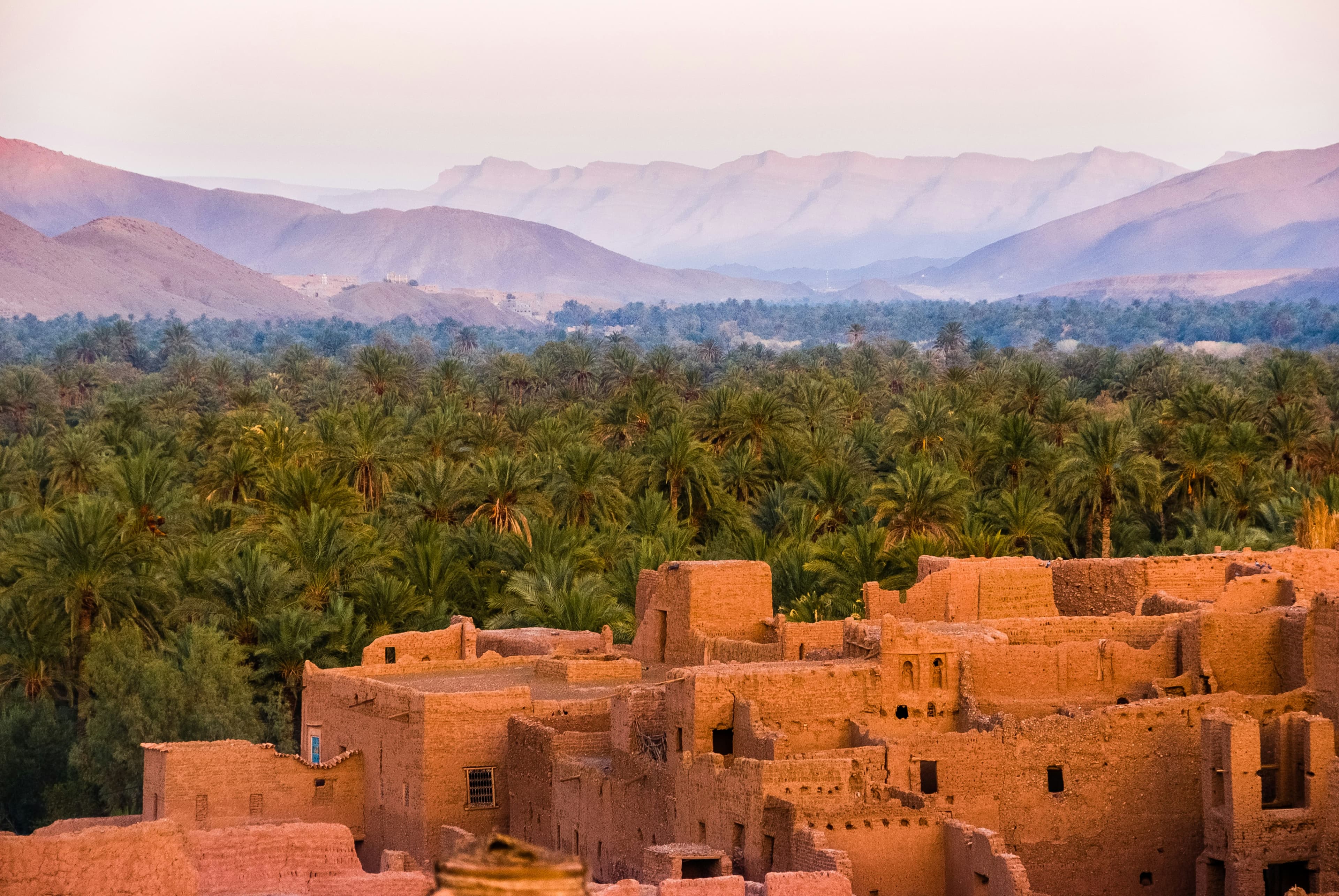
The ruins of Sijilmasa lie near the modern town of Rissani, just south of Erfoud and close to the Erg Chebbi dunes. Founded in the 8th century, Sijilmasa was for many centuries the northern terminal of the most important trans-Saharan routes: the point where gold from sub-Saharan Africa arrived in the Mediterranean world. Today the ruins are modest, but standing among them, it is possible to feel the weight of the commerce and culture that once moved through this place.
The Tuareg and other Berber groups were the masters of the trans-Saharan routes: guides, escorts, caravan leaders, and sometimes raiders who controlled the trade by controlling access to water. Their knowledge of the desert was the infrastructure on which the entire system depended. They knew the wells, the seasonal conditions, the routes where dunes shifted and where the ground was firm. This knowledge was passed down orally and was worth more than any cargo.
The great caravan routes are now roads, or memories of roads. The route from Marrakech through the Draa Valley to Zagora and into Mali follows the ancient path almost exactly. The road from Fes through the Ziz Valley to Rissani and Merzouga traces another. When you drive these routes today, you are following paths that human feet and camel hooves have worn for two millennia. The landscape has changed less than you might expect.
Helpful Resources
Sahara Tours Related to This Guide
Ready to Experience the Sahara?
Turn what you've just read into a real memory. Our Berber-led tours bring every story in this blog to life.
Mustapha Oufota
Berber desert guide and founder of Visit Sahara Desert, born and raised in the Draa Valley