The road from Ouarzazate to Merzouga is lined with kasbahs, towering mud-brick fortresses, some intact and inhabited, others crumbling slowly back into the desert from which they were built. Understanding what you are looking at transforms the drive from a scenic route into a journey through a thousand years of Saharan history.
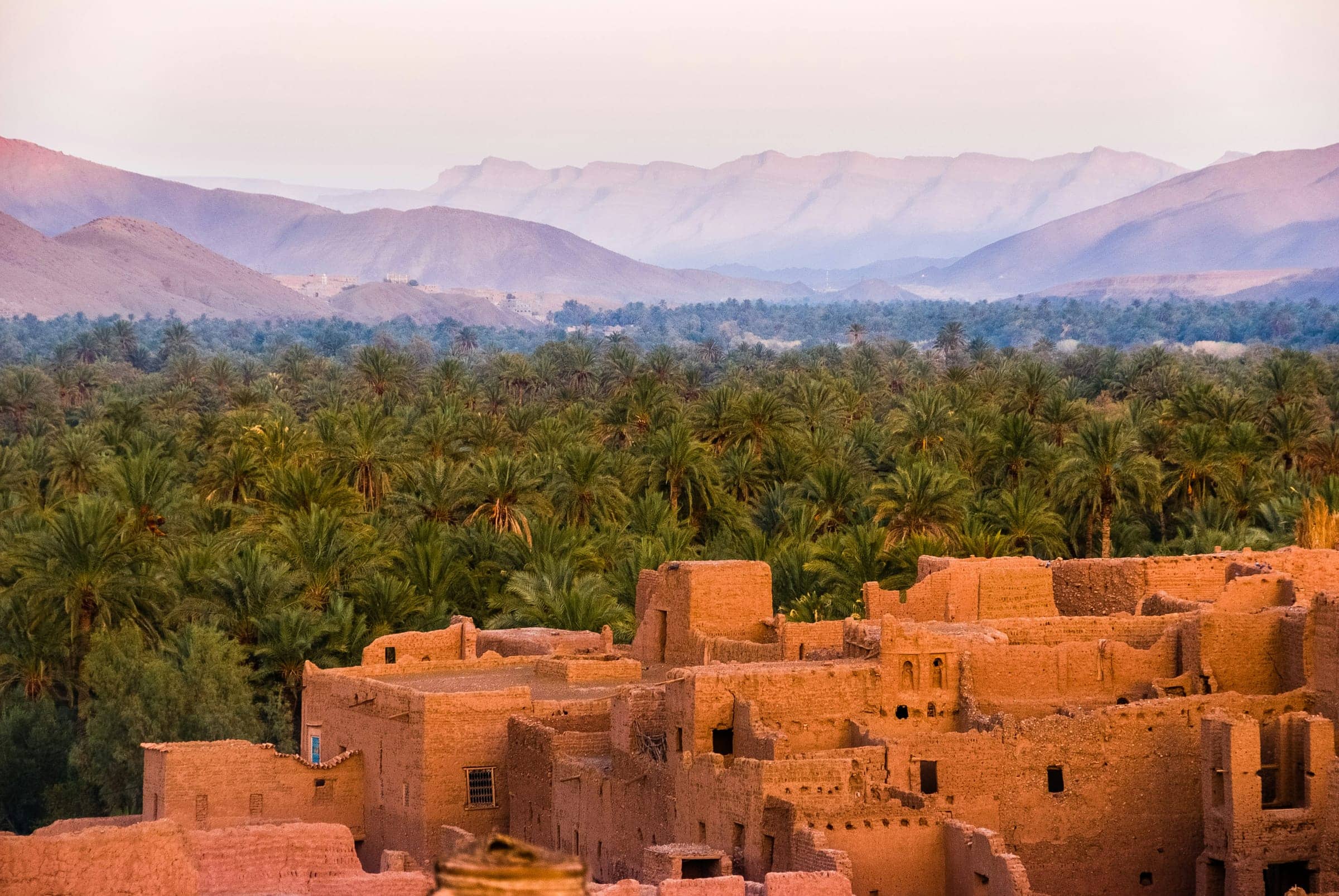
A kasbah (also spelled qasba) is a fortified house or small citadel, originally the residence of a tribal chief or wealthy merchant family. A ksar (plural: ksour) is an entire fortified village, a collective settlement surrounded by defensive walls, with one or two gates, a central mosque, communal granaries, and the residences of multiple families. Both are built primarily from pisé, rammed earth mixed with straw, a material that is well-suited to the desert climate, naturally cool in summer and good at retaining warmth at night.
Aït Benhaddou, on the banks of the Ounila River between Ouarzazate and Marrakech, is UNESCO-listed and one of the best-preserved ksour in Morocco. The ksar was built by the Glaoui tribe and served as a stopping point on the trans-Saharan trade route. It has appeared in more than twenty films, Gladiator, Lawrence of Arabia, Game of Thrones, which means most visitors arrive with a sense of having been there before. See it in the early morning before the tour buses arrive, when it is lit in golden light and almost silent.
The Draa Valley south of Ouarzazate contains more kasbahs per kilometre than almost anywhere else in Morocco: the road passes through a continuous sequence of them, some inhabited, some used only for storage, some abandoned and dissolving. The most spectacular cluster is around Agdz and Zagora, where nineteenth-century Glaoui kasbahs rise from oasis palms in compositions that seem too dramatic to be real. The Tamnougalt ksar, near Agdz, is one of the oldest inhabited ksour in southern Morocco.
Pisé construction seems fragile, and it is, when exposed to rain. But the Sahara receives almost no rain, and dry pisé is extraordinarily durable. The walls of well-maintained kasbahs are typically one to two metres thick, providing exceptional thermal insulation: interior temperatures can be 10–15°C cooler than the outside air on a hot summer day. The material is also sustainable, when a structure is no longer needed, it dissolves back into the earth over decades, leaving no waste. The great architectural loss comes when rains do arrive, which climate change is making more common.
The decorative elements of a kasbah are not merely ornamental: they communicate the status and identity of the family inside. Geometric patterns carved into the upper towers are distinctively Berber, echoing the Tifinagh alphabet. The height and elaboration of the corner towers signals wealth and power. The number of doors and windows visible from the street encodes information about the household's size and importance. Looking at a kasbah with this knowledge, what appeared to be a fortress reveals itself as a text.
Many kasbahs and ksour are lived in. When entering inhabited areas, always ask permission and respect any areas that are indicated as private. Buy crafts and food directly from the residents rather than from outside vendors who take a commission. Dress modestly, covered shoulders and knees are appreciated. If a family invites you in for tea, accept. The kasbahs that have survived are maintained by the communities inside them, and a visitor who treats that community with respect is a visitor worth having.
Helpful Resources
Sahara Tours Related to This Guide
Ready to Experience the Sahara?
Turn what you've just read into a real memory. Our Berber-led tours bring every story in this blog to life.
Mustapha Oufota
Berber desert guide and founder of Visit Sahara Desert, born and raised in the Draa Valley