The northern route from Fes to Merzouga is 450 kilometres through the Middle Atlas mountains, the dramatic Ziz Valley, and the vast pre-Saharan hammada. Driven in two days with overnight stops, it is a different approach to the Sahara from the more famous Marrakech route, less travelled, arguably more beautiful, and better suited to travellers who are using Fes as their base.
Leave Fes south on the N13 into the Middle Atlas, a landscape of cedar forests, Berber mountain villages, and, in winter and spring, snow-covered peaks that feel entirely different from the desert you are heading toward. Azrou is worth a stop: the cedar forests around the town are home to a population of Barbary macaques, the only wild primates in Africa north of the Sahara. Continue to Midelt, the "Apple Capital" of Morocco, famous for its fruit orchards, for lunch, then push on to Errachidia for the night.
South of Errachidia, the road descends into the Ziz Valley through a gorge of extraordinary scale: red cliffs several hundred metres high on both sides, the road carved into the rock face, the Ziz River threading through date palms far below. The viewpoint at the Hassan Addakhil Dam, where the gorge opens into the Tafilalt plain, is one of the most dramatic in Morocco. Below the dam, the road passes through a continuous palm oasis, over a million date palms stretching south for 40 kilometres.
Rissani, 20 kilometres south of Erfoud, is where history and desert intersect. The town sits near the ruins of Sijilmasa, the great medieval city that served as the northern terminal of the trans-Saharan gold trade for six centuries. The Rissani souk, held three times a week, is one of the most authentic markets in southern Morocco: a genuine trading post for the surrounding desert communities, not a tourist market. The mausoleum of Moulay Ali Sharif, ancestor of Morocco's current royal family, is also here.
Erfoud sits on a bed of ancient marine sediment so rich in fossils that the local stone-cutting industry has made the town famous. Trilobites, ammonites, and orthoceras fossils are cut from local rock and sold in workshops throughout the town. The fossils date back 350–500 million years, to when the Sahara was an ocean floor. A brief stop at one of the Erfoud fossil workshops, where you can see the cutting and polishing process, gives an extraordinary geological perspective on the landscape you have been driving through.
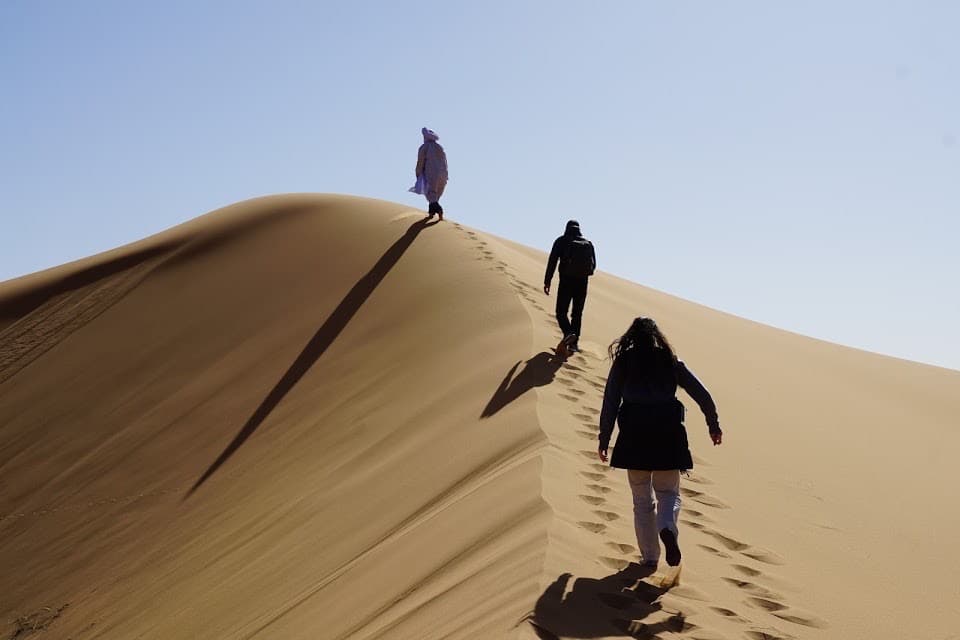
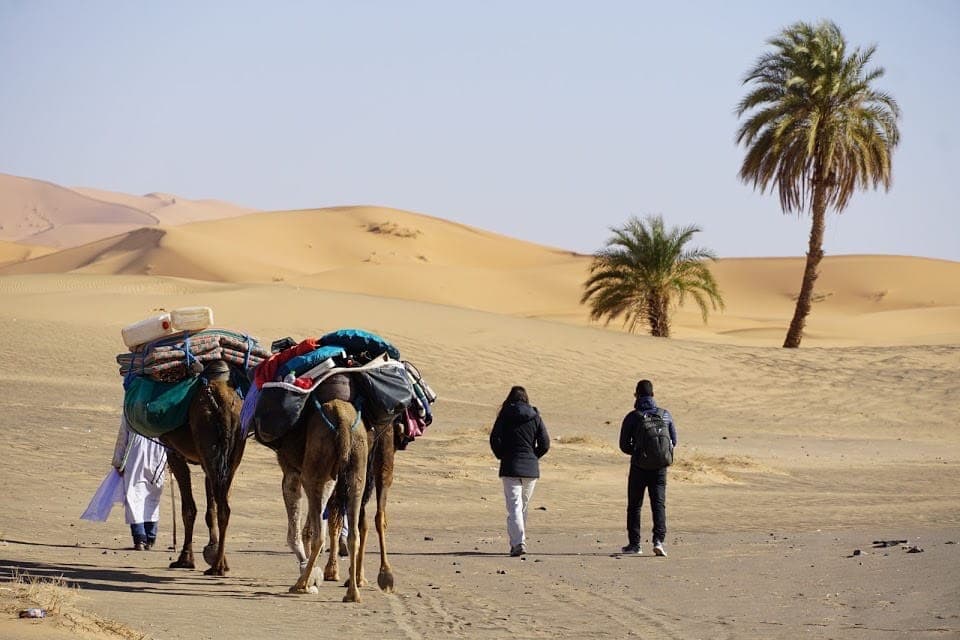
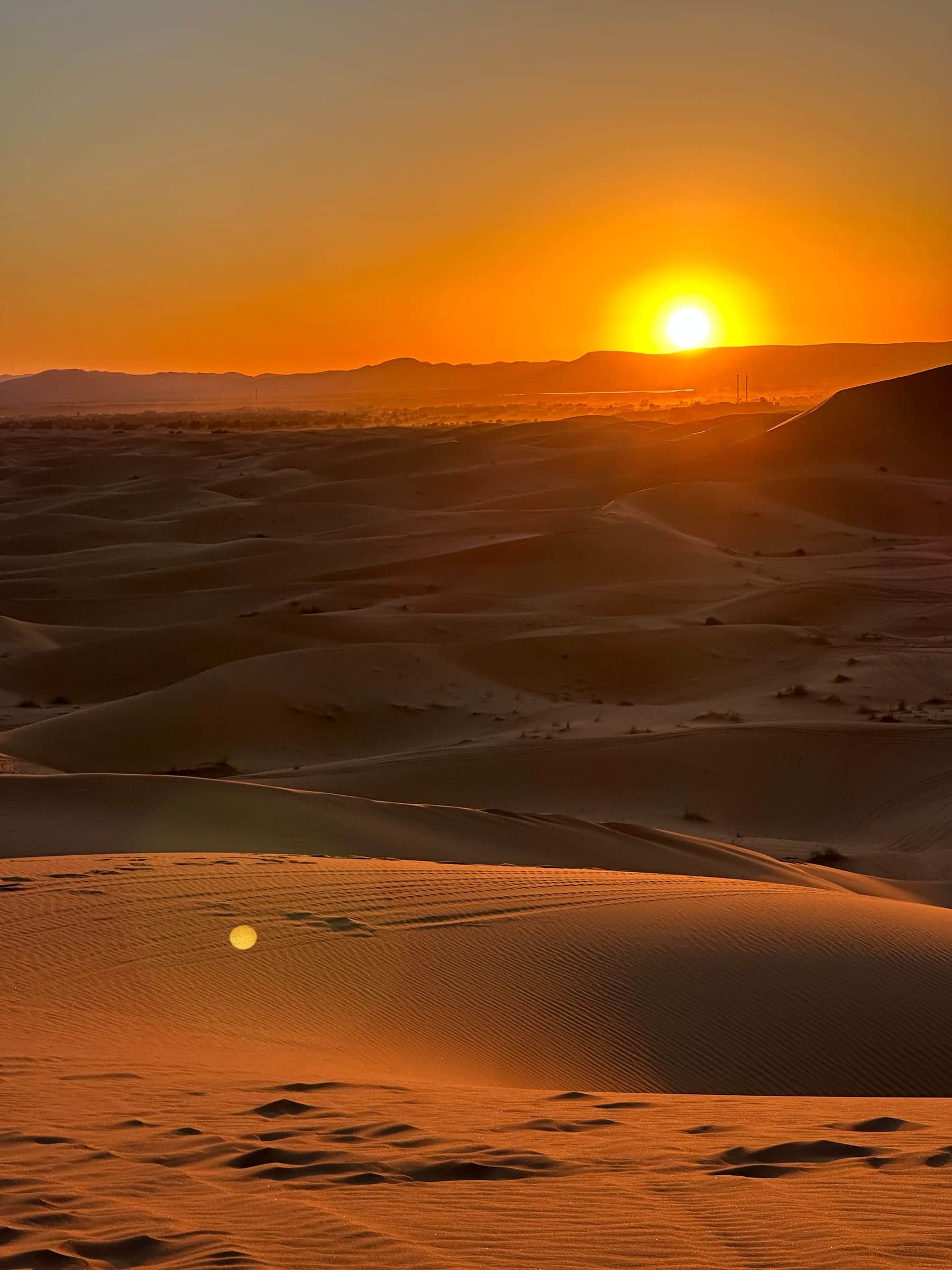
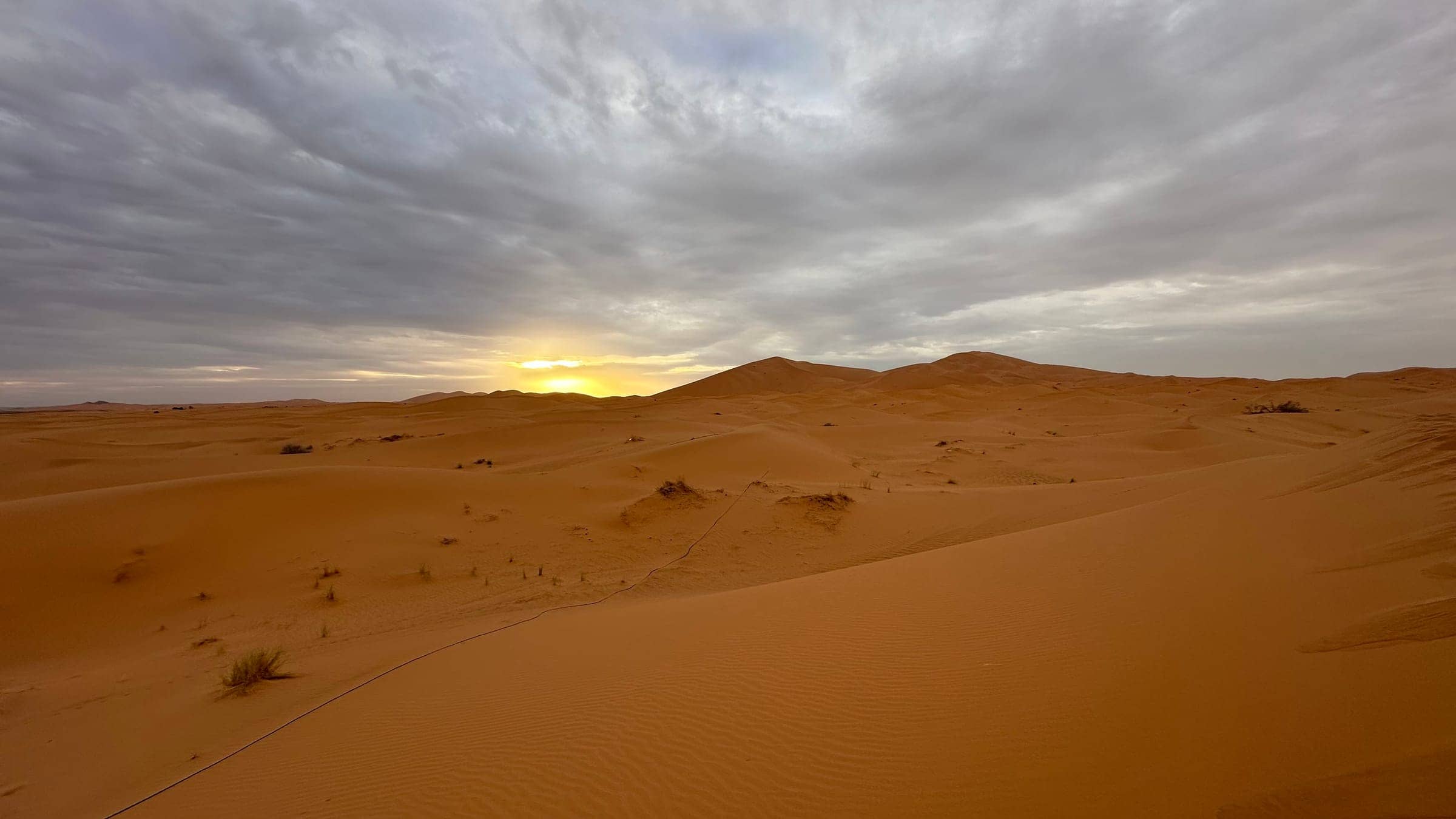
The road from Erfoud to Merzouga crosses the hammada, the flat, dark stone plain of the pre-Saharan desert, in a straight line that seems to go on forever. Then, abruptly and with no gradual transition, the dunes of Erg Chebbi appear on the horizon: a wall of orange sand rising 150 metres from the flat stone plain like something placed there by deliberate act. The contrast between the bare hammada and the dunes is one of the most startling natural transitions in North Africa. Arrive in the late afternoon for the best light.
From Merzouga, you can return to Fes the way you came, which in the opposite direction has a completely different character, particularly the Ziz Gorge in morning light. Alternatively, loop back via Ouarzazate and Marrakech if your itinerary allows, turning the desert trip into a circuit of southern Morocco. A third option, increasingly popular with experienced travellers, is to continue south into the desert toward Taouz or Erg Ouzina before returning north: landscapes that very few international visitors reach.
Helpful Resources
Sahara Tours Related to This Guide
Ready to Experience the Sahara?
Turn what you've just read into a real memory. Our Berber-led tours bring every story in this blog to life.
Mustapha Oufota
Berber desert guide and founder of Visit Sahara Desert, born and raised in the Draa Valley