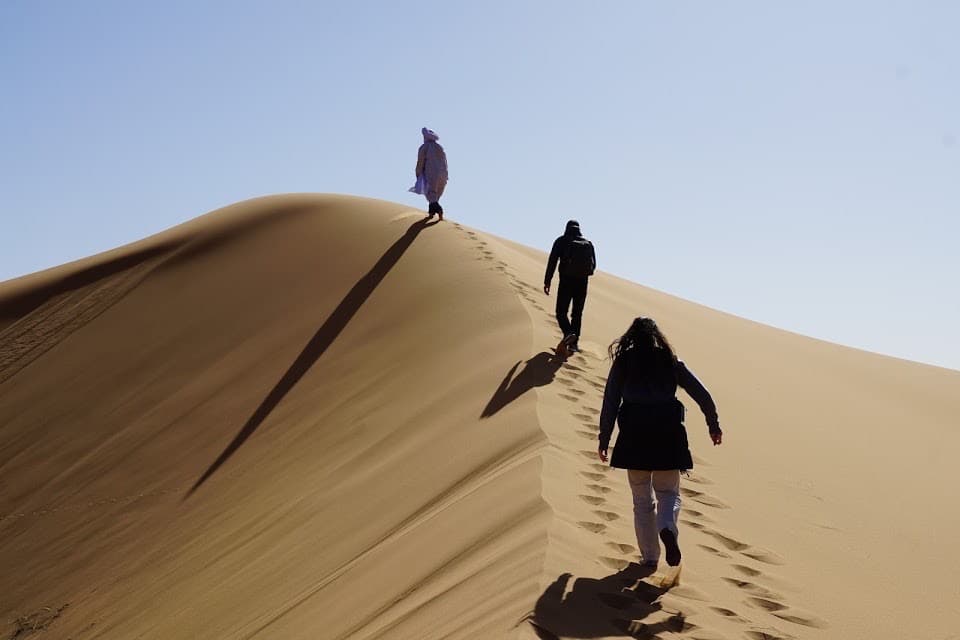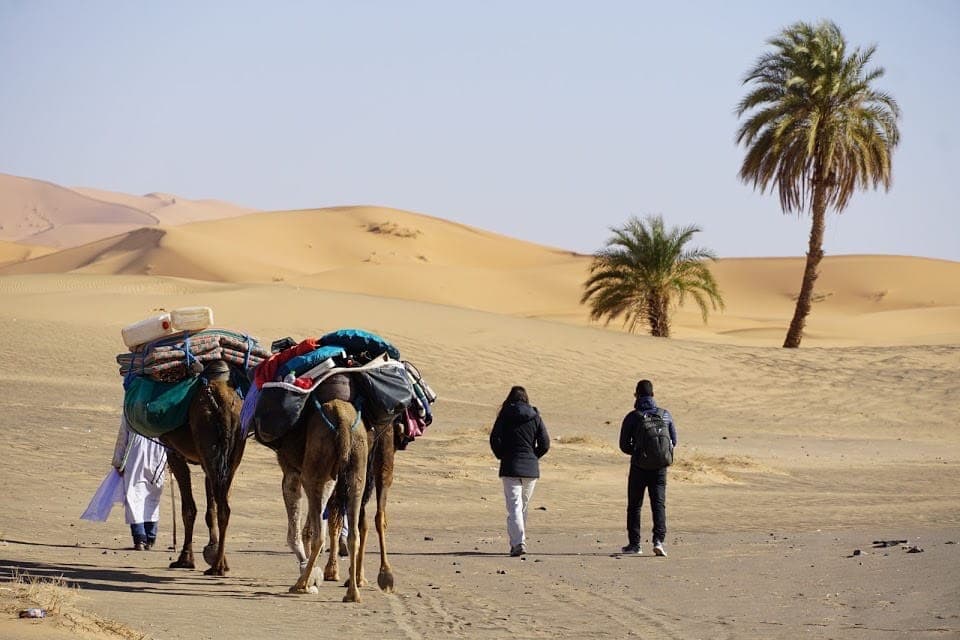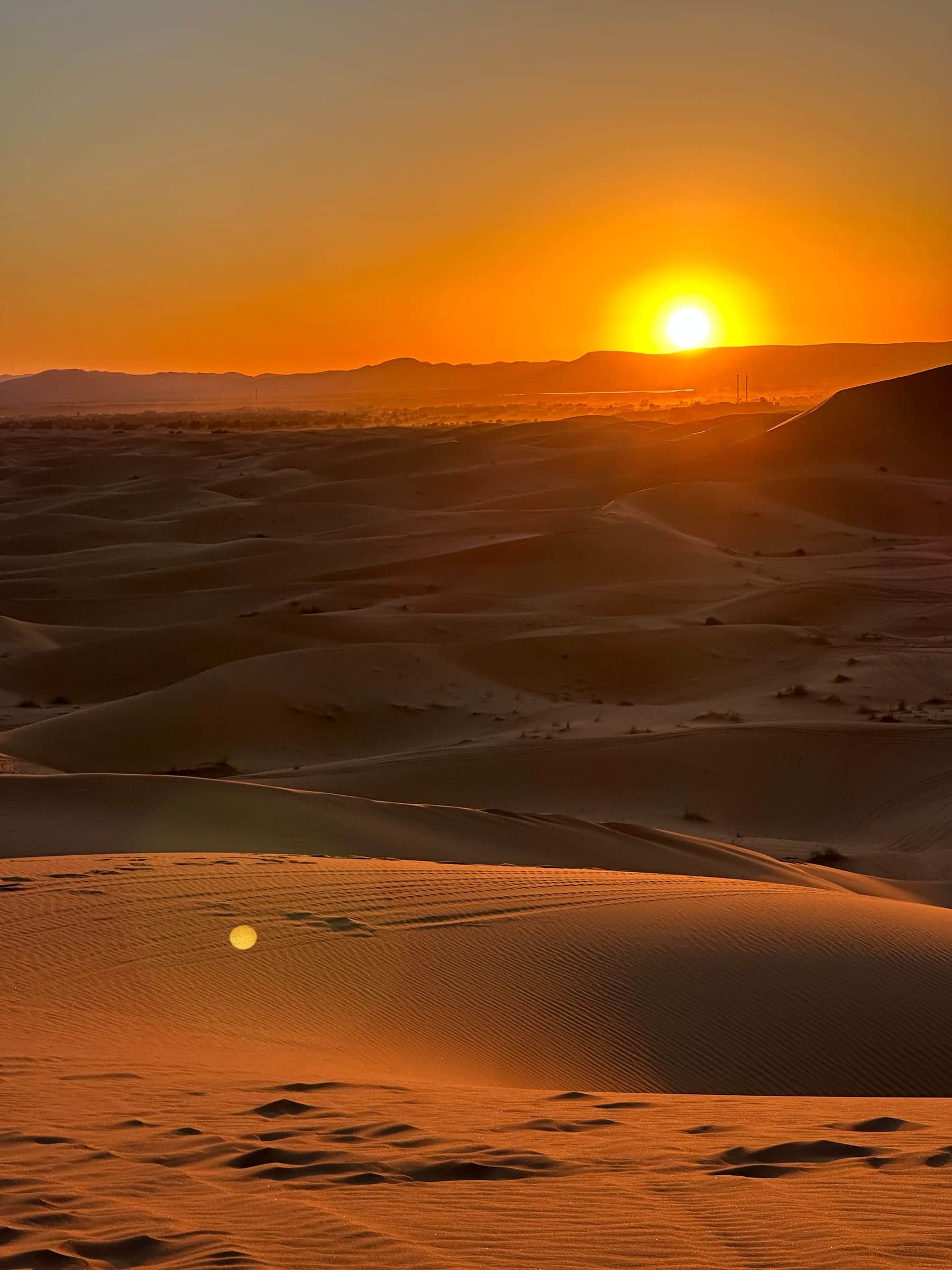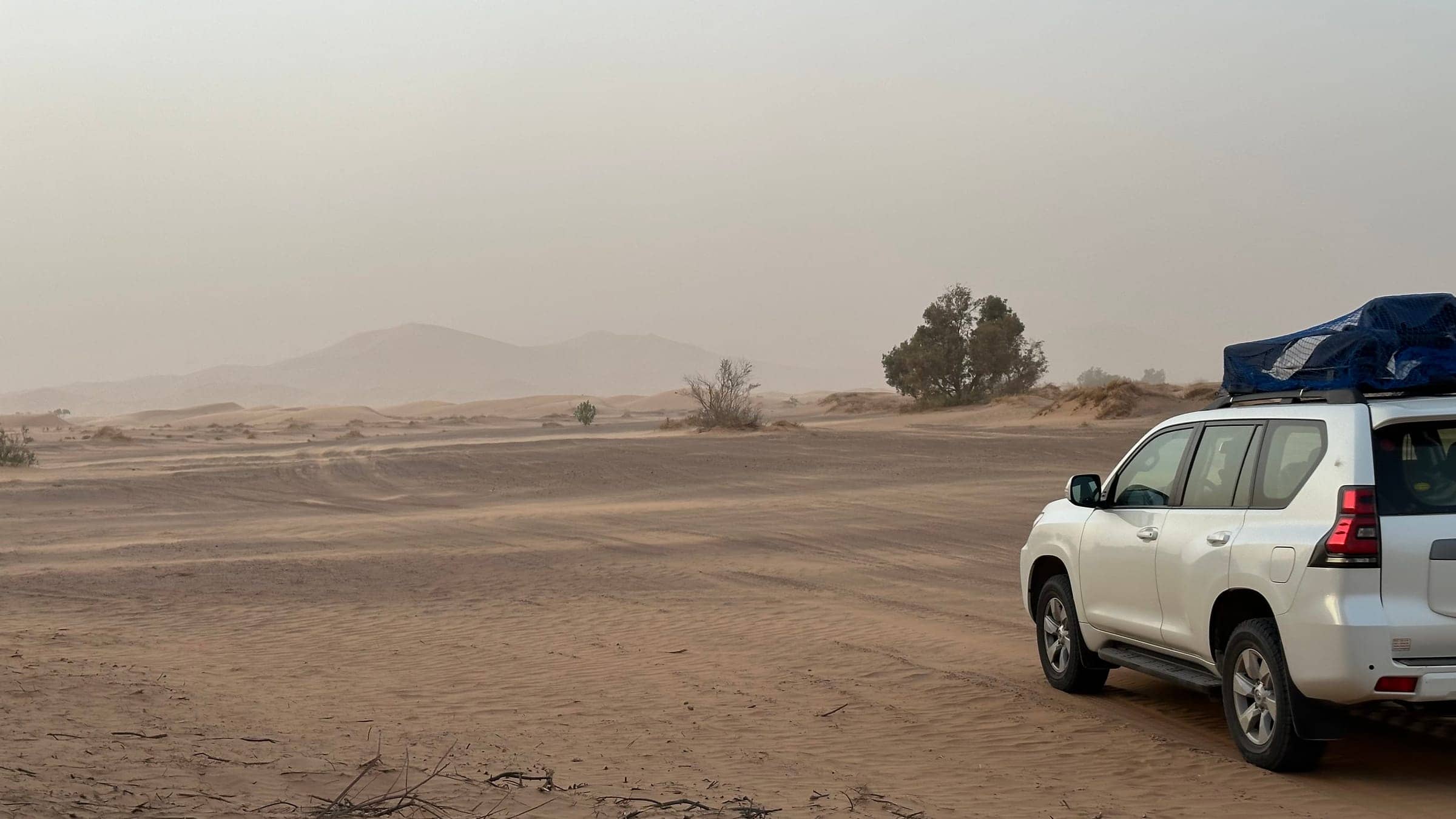
The road from Marrakech to Merzouga is 550 kilometres of extraordinary variety, from the snow-capped peaks of the High Atlas to the lush Dadès Valley to the vast stone plains of the pre-Saharan hammada and finally the golden dunes of Erg Chebbi. Driven in two days with overnight stops, it is one of the great road trips of Africa.
Leave Marrakech early, before 8am, to cross the Tizi n'Tichka mountain pass in the morning light. The pass reaches 2,260 metres and offers views across the High Atlas that are, on clear days, almost impossibly beautiful. Stop at the UNESCO World Heritage kasbah of Aït Benhaddou for an hour: this fortified mud-brick city on the banks of the Ounila River has appeared in more films and television series than any other Moroccan location. Stay overnight in Ouarzazate, the "Gateway to the Desert."
From Ouarzazate, the road east follows the Dadès Valley through a succession of kasbahs, oases, and traditional Berber villages that have changed little in centuries. The Dadès Gorge, a narrow canyon of red rock formed by the Dadès River, is a magnificent detour and worth spending an hour walking. Further east, the Todra Gorge is even more dramatic: a 300-metre-deep slot canyon only 10 metres wide at the base. These are the geological highlights of the pre-Saharan landscape.
The final stretch from the Draa Valley to Merzouga passes through the hammada, the vast stone plain of the pre-Saharan desert, flat and otherworldly, with distant mountains on the horizon and occasional glimpses of the road ahead stretching absolutely straight to the vanishing point. The first sight of the Erg Chebbi dunes, rising abruptly from the flat stone plain like an orange mirage, is a genuine shock. After two days of approaching, you are suddenly there.
The mountain roads of the High Atlas require careful driving: they are narrow, winding, and can be icy in winter. The desert roads east of Ouarzazate are better maintained but monotonous and very long. If you are self-driving, build in more time than Google Maps suggests, the distances are real but the journey is slower than expected. Many travellers prefer a guided tour that combines driving with expert narrative about the landscapes, kasbahs, and communities you pass through.
Some travellers return the way they came, which allows a second look at the High Atlas in different light. Others loop back via Fes, driving north through the Ziz Valley and the Middle Atlas, which adds a full day but offers entirely different landscapes and Morocco's imperial city at the end. The loop route via Fes is worth it if you have the time: it turns a desert trip into a survey of Morocco's greatest geography.
Helpful Resources
Sahara Tours Related to This Guide
Ready to Experience the Sahara?
Turn what you've just read into a real memory. Our Berber-led tours bring every story in this blog to life.
Mustapha Oufota
Berber desert guide and founder of Visit Sahara Desert, born and raised in the Draa Valley