Ask anyone who has driven from Marrakech or Ouarzazate to Merzouga what surprised them most, and many will mention Todra Gorge or the Dades Valley before they mention the dunes themselves. These two landscapes, a narrow limestone canyon and a red-walled valley of a thousand kasbahs, are not a detour on the way to the Sahara. They are part of the destination.
Todra Gorge is a dramatic limestone canyon carved by the Todra River, narrowing to just 10 metres wide at its base while the sheer orange-red walls rise up to 300 metres on either side. A short, flat walk along the river floor takes you deep into the gorge, past shallow pools where local children swim in warmer months, with the walls closing in overhead until the sky becomes a narrow ribbon of blue.
Todra is also one of the world's renowned sport climbing destinations, and even non-climbers enjoy watching climbers work the massive vertical faces from below. For walkers, a longer route continues past the main gorge into the wider Todra valley, past Berber villages, ancient irrigation channels called khettaras, and terraced fields that have been farmed the same way for centuries. Bring proper shoes: the riverbed can be uneven and, in spring, genuinely wet.
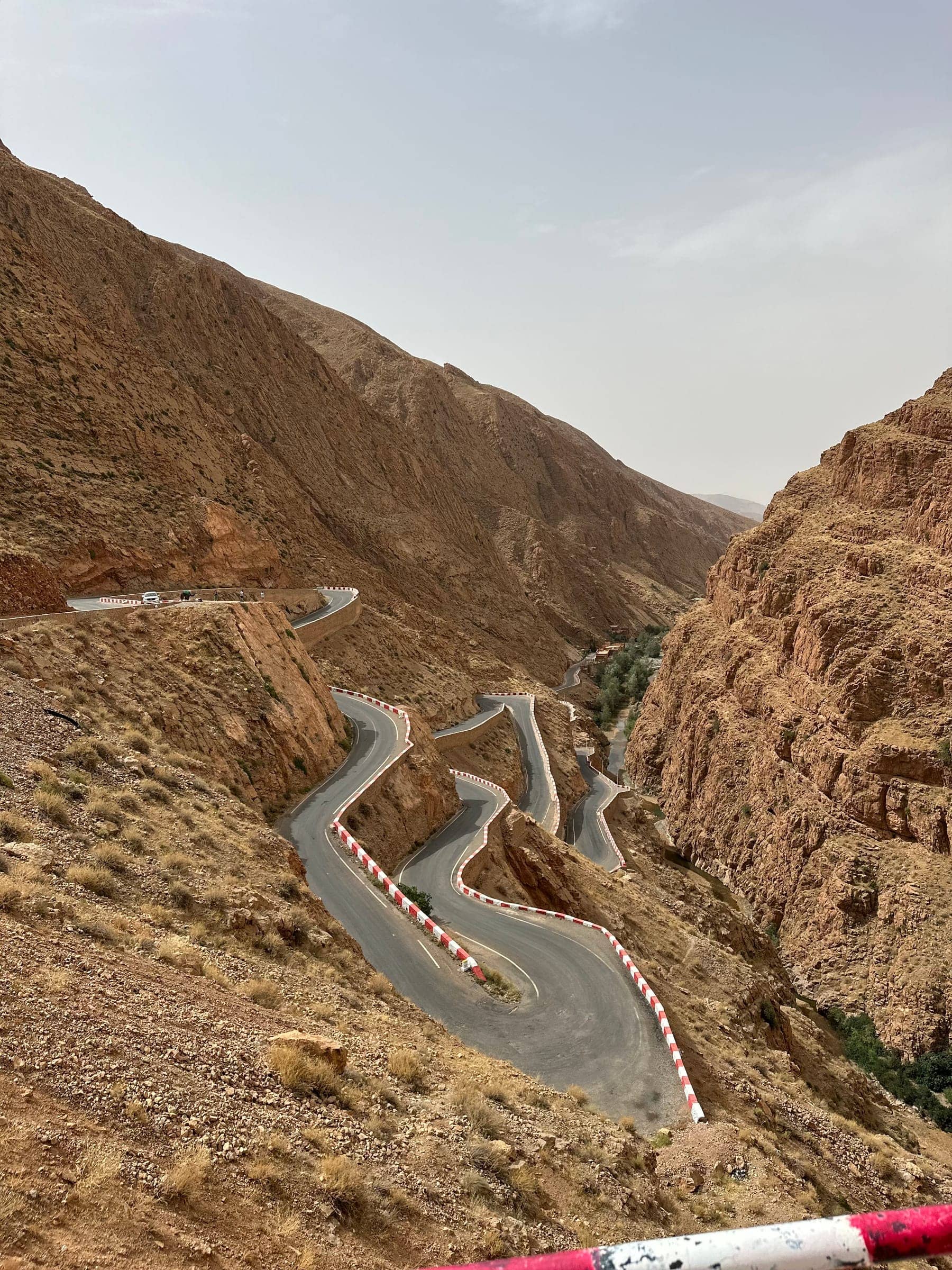
West of Todra, the Dades Valley earns its nickname honestly: the road follows the Dades River past an almost continuous procession of mud-brick kasbahs, some inhabited, some crumbling, rising from a valley floor lined with palm and almond groves. The contrast between the deep red rock of the surrounding mountains and the green of the valley floor is one of the most photographed stretches of road in southern Morocco.
Both valleys are home to Berber communities who have farmed and lived in these landscapes for generations. Small roadside stops sell local products, dried roses in the nearby Dades area, walnuts, and handwoven carpets, often directly from the families who made them. A short stop to buy from a local vendor, rather than a larger roadside souvenir shop, puts money directly into the community whose valley you are passing through.
A worthwhile stop at Todra Gorge takes one to two hours: enough time for the walk into the canyon and a tea stop at one of the small cafés built into the rock face. The Dades Valley is better experienced as a slower drive with two or three short stops rather than a single long pause, since its beauty is cumulative, kasbah after kasbah, rather than concentrated at one viewpoint.
Most multi-day tours between Ouarzazate and Merzouga pass directly through this corridor, making Todra and Dades a natural stop on day two of a longer itinerary rather than a separate trip. If you are self-driving, budget extra time here specifically: it is easy to underestimate how much you will want to stop, and rushing this stretch is one of the most common regrets travellers report after their trip.
Helpful Resources
Sahara Tours Related to This Guide
Ready to Experience the Sahara?
Turn what you've just read into a real memory. Our Berber-led tours bring every story in this blog to life.
Mustapha Oufota
Berber desert guide and founder of Visit Sahara Desert, born and raised in the Draa Valley